
Humans spend nearly one-third of their lives asleep, yet many people believe that sleep is simply a period during which the body stops working until a new day begins. But the reality is very different; during sleep, the brain remains active, and the body begins carrying out thousands of vital processes that cannot take place with the same efficiency while awake. During these hours, memory is reorganized, cells are repaired, hormones are regulated, the immune system is strengthened, waste products that accumulate inside the brain are cleared, and the energy needed for the following day is restored.
Sleep is a natural, cyclical biological state in which awareness of the external environment decreases, while the brain and body continue to perform complex vital functions aimed at recovery, repair, and the regulation of biological processes. Sleep is not merely a theory or a habit, but an essential physiological process no less important than food, water, and breathing.
Modern research has shown that good sleep directly affects learning, memory, attention, decision-making, creativity, mental health, immunity, heart health, and hormonal balance, while chronic sleep deprivation increases the risk of developing a large number of physical, psychological, and neurological disorders.
In this article, we will explore in depth how sleep works, the biological clock, the different stages of sleep, the importance of sleep quality, its effects on the brain, memory, hormones, and mental performance, what happens when a person does not get enough sleep, and how sleep quality can be improved scientifically.
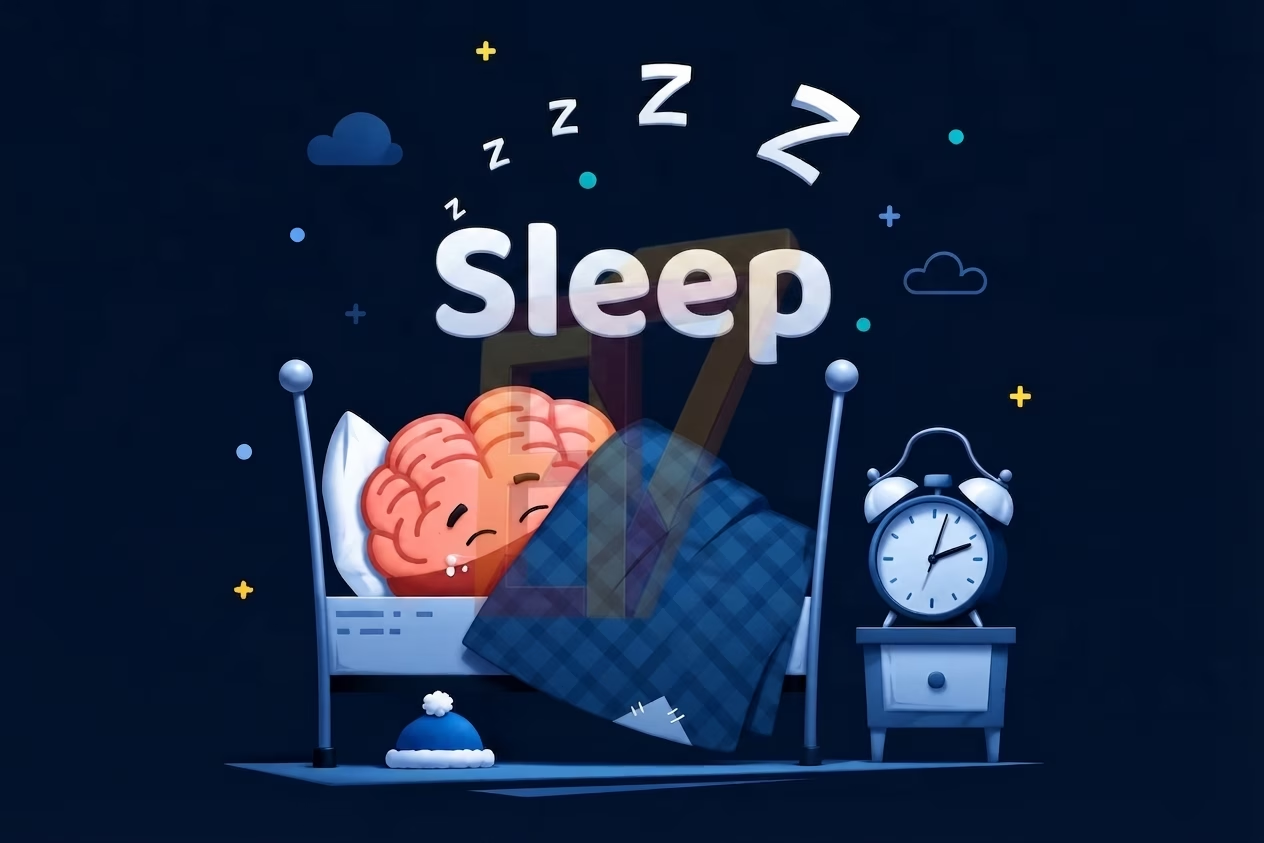
Sleep is one of the most important biological processes that humans depend on to remain healthy and maintain the functions of the brain and body. Although a person appears still and less responsive to external stimuli while asleep, the body is actually in a state of significant internal activity, as hundreds of vital processes begin that are difficult, or impossible, to perform with the same efficiency while awake.
Sleep is defined as a natural, cyclical, and reversible physiological state during which the level of awareness of the external environment decreases, while the brain and body continue to regulate numerous essential processes, such as cell repair, hormone regulation, immune system support, memory consolidation, the clearance of waste products that accumulate inside the brain, and the restoration of energy needed for the following day.
Therefore, sleep is not a period during which the brain stops working, but rather a different stage of neural activity. Brain-wave patterns, neural activity, hormone function, and organ functions all change according to the body's needs during this period.
Scientists once believed that sleep was merely a means of rest, but modern research has shown that it is an extremely complex process that affects learning, memory, focus, decision-making, creativity, emotions, immunity, growth, heart health, metabolism, and even life expectancy.
Sleep is not a pause from life; it is the time when the body and brain rebuild themselves in preparation for a new day.
During sleep, the brain works differently than it does while awake. Some brain regions become less active, while other regions responsible for consolidating memories, processing information, and regulating emotions become more active. Neural cells also begin reorganizing their connections, which helps improve learning and the speed of information processing the following day.
At the same time, the body begins repairing damaged tissues, building proteins, releasing growth hormone, regulating the immune system, and restoring hormonal balance and energy stores. In addition, the brain is cleared of metabolic waste products that accumulate during waking hours through what is known as the Glymphatic System.
While you sleep, your body works for hours so that you can wake up in the best possible condition.
| Function | What Happens During Sleep |
|---|---|
| Brain. | Regulation of neural connections and memory consolidation. |
| Immune system. | Production of defensive cells and proteins. |
| Muscles. | Tissue repair and recovery. |
| Hormones. | Regulation of the secretion of numerous hormones. |
| Energy. | Restoration of energy and preparation for the following day. |
Studies indicate that most animals have some form of sleep, but its duration and characteristics vary from one species to another. Some animals sleep for long hours, while others sleep for very short periods. Some marine animals can also keep one half of their brain awake while the other half sleeps to protect themselves from danger.
This indicates that sleep is not a human habit, but an essential biological function that evolved over millions of years because it is necessary for the survival of living organisms.
| Benefit | Effect |
|---|---|
| Improved memory. | Easier learning. |
| Increased focus. | Better mental performance. |
| Stronger immunity. | Greater resistance to illness. |
| Hormonal regulation. | Better balance within the body. |
| Tissue repair. | Faster recovery. |
The quality of your life while awake begins with what happens during your sleep.
Now that we have explored the concept of sleep, we move on to the factor that naturally regulates the timing of sleep and waking: the biological clock (Circadian Rhythm). We will learn how it works and why light and sleep timing affect the quality of rest, as well as mental and physical performance.
After exploring the concept of Sleep, we move on to the system that determines when we feel sleepy and when we feel alert: the biological clock (Circadian Rhythm). Sleep does not depend only on the number of hours we have been awake. It is also controlled by a precise internal system that operates continuously for approximately twenty-four hours and regulates many vital functions of the body, such as sleep, waking, hormone secretion, body temperature, appetite, and mental activity.
The biological clock is an internal system that depends on a group of neurons located in a small region of the brain known as the Suprachiasmatic Nucleus (SCN), which is located in the Hypothalamus. This region acts as a central regulator that coordinates the timing of sleep and waking and sends signals to different organs of the body to maintain biological balance.
Although this clock operates automatically, it depends heavily on natural light from the sun. When light enters the eyes, it sends direct signals to the biological clock telling it that it is time to be awake. When darkness arrives, the clock begins sending signals that encourage the body to prepare for sleep.
This is why most people feel energetic during the day and sleepy after sunset, because the body is naturally programmed to synchronize with the cycle of night and day.
The biological clock does not simply tell you the time; it tells your body when to work and when to rest.
The process begins when the retina of the eye detects light and then transmits this information to the suprachiasmatic nucleus inside the brain. When the light is strong, especially in the morning, the brain reduces the secretion of the hormone melatonin (Melatonin), which is responsible for promoting sleepiness, and increases the body's activity and alertness.
When light levels decrease in the evening, the biological clock begins sending signals to gradually increase melatonin secretion, leading to lower alertness, increased sleepiness, and preparation for sleep.
The biological clock also regulates the secretion of numerous other hormones and controls changes in body temperature, blood pressure, metabolic rate, and levels of alertness throughout different times of the day.
Light is the primary language through which the sun communicates with your biological clock.
| Function | Effect of the Biological Clock |
|---|---|
| Sleep. | Determining when sleepiness occurs. |
| Waking. | Increasing alertness in the morning. |
| Hormones. | Regulating melatonin and cortisol. |
| Body temperature. | Rises during the day and decreases at night. |
| Mental performance. | Variations in focus levels throughout the day. |
When a person goes to sleep and wakes up at different times each day, or is exposed to blue light until late at night, the biological clock begins to lose its regularity. This can lead to difficulty falling asleep and waking up, reduced sleep quality, fatigue, poor focus, mood fluctuations, even when a person gets a sufficient number of hours of sleep.
Circadian rhythm disruption is also associated with an increased risk of obesity, diabetes, heart disease, depression, and impaired cognitive performance, particularly among people who work night shifts for long periods.
| Benefit | Effect |
|---|---|
| Easier sleep. | Reduced time needed to fall asleep. |
| Easier waking. | Greater morning energy. |
| Improved focus. | Better mental performance. |
| Hormonal regulation. | Better biological balance. |
| Improved sleep quality. | Better physical and mental recovery. |
Regular sleep begins with a regular biological clock, not just with the number of hours of sleep.
After exploring the biological clock (Circadian Rhythm), we move on to the stages of sleep (Sleep Stages), where we will learn how the brain moves through the different stages of sleep and why the body needs each stage to achieve recovery, consolidate memory, and restore energy.
After exploring the biological clock (Circadian Rhythm), we arrive at one of the most important aspects that explains how sleep works: the stages of sleep (Sleep Stages). Many people believe that sleep is one fixed state that continues throughout the night, but in reality, the brain continuously moves through several different stages, each with its own neural activity, specific functions, and significant importance for the health of the body and brain.
Sleep stages are divided into two main types: Non-Rapid Eye Movement (NREM) sleep and Rapid Eye Movement (REM) sleep. During a normal night of sleep, a person goes through several sleep cycles, with each cycle lasting approximately ninety minutes on average and repeating four to six times depending on the total duration of sleep.
During each cycle, the brain gradually moves from light sleep to deep sleep and then reaches the REM stage, before a new cycle begins. Each part of this cycle performs a different function, which is why losing one of the stages can affect sleep quality, even if a person sleeps for a sufficient number of hours.
Good sleep depends not only on its duration, but also on moving naturally through all of its stages.
NREM sleep accounts for approximately seventy-five to eighty percent of total sleep in most adults. It is divided into three consecutive stages, beginning with light sleep and gradually becoming deeper until the body reaches the deepest stage of sleep.
| Stage | What Happens During It |
|---|---|
| N1. | Transition from wakefulness to sleep and easy awakening. |
| N2. | Reduced body activity, slower heart rate, and stabilized sleep. |
| N3. | Deep sleep, body repair, and growth hormone secretion. |
The third stage (N3) is considered the most important stage for physical recovery. The body reaches its deepest state of relaxation, while heart rate, blood pressure, and breathing rate decrease. At the same time, processes begin to repair muscles and tissues, support the immune system, and restore energy.
Deep sleep is the workshop where the body repairs itself.
After deep sleep, the brain enters the REM stage, during which brain activity increases significantly, even though most of the body's muscles become almost completely relaxed to prevent the person from physically acting out their dreams.
During this stage, the eyes move rapidly beneath the eyelids, and brain activity becomes similar to that of wakefulness. For this reason, REM is considered the stage associated with most vivid dreams that people remember upon waking.
The REM stage also plays an important role in memory consolidation, emotional regulation, learning, creativity, and forming new connections between different pieces of information.
While deep sleep repairs the body, REM sleep reorganizes the brain.
A person does not spend the entire night in a single stage, but continuously moves between NREM and REM. Periods of deep sleep are longer during the first half of the night, while REM periods gradually become longer as morning approaches. Therefore, waking up very early may deprive a person of a significant portion of REM sleep, while sleeping for too short a period may also prevent sufficient deep sleep.
| Stage | Main Functions |
|---|---|
| N1. | Gradual transition into sleep. |
| N2. | Sleep stabilization and reduced awakening. |
| N3. | Physical recovery and tissue repair. |
| REM. | Dreaming, memory consolidation, and emotional regulation. |
| Benefit | Effect |
|---|---|
| Body recovery. | Increased physical energy. |
| Improved memory. | Easier learning. |
| Emotional regulation. | Better psychological stability. |
| Stronger immunity. | Lower risk of illness. |
| Higher mental performance. | Greater focus and faster thinking. |
Each sleep stage performs a function that the other stages cannot fully replace.
After exploring the stages of sleep (NREM & REM), we move on to sleep duration (Sleep Duration), where we will learn how many hours of sleep humans need at different stages of life, why sleep needs vary from one person to another, and what happens when sleep duration falls below the required amount.
After exploring the stages of sleep (NREM & REM), we arrive at a question that is frequently asked: How many hours of sleep do we need? Many people believe that the answer is the same for everyone, but in reality, sleep needs vary according to age, health status, physical activity, and individual circumstances. The number of hours alone is also not enough to determine sleep quality, because continuous, deep, and regular sleep is more important than simply spending a long time in bed.
Sleep Duration refers to the total amount of time a person spends asleep during a twenty-four-hour period. It is one of the most important factors determining the ability of the body and brain to recover, repair cells, consolidate memories, regulate hormones, and maintain mental and physical performance.
Research indicates that most adults need between seven and nine hours of sleep per day. However, some people may need slightly more or slightly less depending on genetic factors, activity levels, and health status. Nevertheless, consistently falling outside this range may lead to negative effects over time.
Sufficient sleep is not a luxury, but an essential biological need for maintaining the health of the brain and body.
| Age Group | Recommended Hours per Day |
|---|---|
| Newborns. | Fourteen to seventeen hours. |
| Children. | Nine to twelve hours. |
| Adolescents. | Eight to ten hours. |
| Adults. | Seven to nine hours. |
| Older adults. | Seven to eight hours, generally. |
The need for sleep varies because the body does not use energy at the same rate in all people. Children need longer periods of sleep because of the rapid growth of the brain and body, while athletes may need additional sleep for muscle recovery. A sick person may also need more sleep so that the body can fight illness and repair damaged tissues.
Genetic factors, daily activity levels, psychological stress, and the surrounding environment also influence the number of hours of sleep each person needs to achieve optimal performance.
Sleep needs vary from person to person, but chronic sleep deprivation harms everyone.
Not necessarily. Just as insufficient sleep can negatively affect health, consistently sleeping for excessively long periods may also be a sign of a health problem, a sleep disorder, depression, or certain chronic illnesses. Therefore, the goal is not to sleep for as long as possible, but to obtain the appropriate amount of good-quality, regular sleep.
| Area | Effect |
|---|---|
| Focus. | Reduced attention and increased distractibility. |
| Memory. | Impaired learning and difficulty remembering. |
| Immunity. | Increased susceptibility to illness. |
| Mood. | Increased stress and irritability. |
| Physical performance. | Slower recovery and reduced strength. |
| Benefit | Effect |
|---|---|
| Increased energy. | Greater activity throughout the day. |
| Improved thinking. | Faster decision-making. |
| Stronger immunity. | Lower likelihood of illness. |
| Improved mood. | Greater psychological stability. |
| Enhanced learning. | Better memory and greater focus. |
What matters is not sleeping as much as possible, but sleeping enough to allow your body and brain to fully recover.
After exploring Sleep Duration, we move on to Sleep Quality, where we will learn why a person may wake up tired despite sleeping for many hours, how sleep quality can be assessed, and how it can be improved scientifically.
After exploring Sleep Duration, we arrive at an element that is no less important: Sleep Quality. Many people believe that sleeping for eight hours automatically means getting sufficient rest, but in reality, a person may sleep for this amount of time and wake up exhausted, while someone else may sleep slightly less and feel energetic and focused throughout the day. The reason is that sleep quality can be more important than the number of hours in many situations.
Sleep quality refers to how effectively sleep fulfills its vital functions, such as naturally progressing through all sleep stages, having few awakenings during the night, falling asleep within a reasonable amount of time, and feeling energetic upon waking. Therefore, good sleep is not measured only by the number of hours, but by how effectively the body and brain are able to benefit from those hours.
When sleep quality is high, the brain can consolidate memories more effectively, the body restores its energy, hormones become regulated, mood improves, and the ability to focus and make decisions increases. When sleep quality is low, all of these functions begin to decline even if the duration of sleep is sufficient.
Long sleep does not always mean good sleep, just as short sleep does not always mean poor sleep.
Sleep quality depends on several factors, the most important of which are the time it takes to fall asleep, maintaining sleep without frequent interruptions, spending enough time in deep sleep and REM sleep, and waking up feeling rested and alert. If a person wakes up several times every night or spends most of the night in light sleep, their sleep quality will be low even if they remain in bed for many hours.
| Factor | Role in Sleep Quality |
|---|---|
| Time to fall asleep. | Falling asleep within a reasonable period. |
| Sleep continuity. | Reducing frequent awakenings. |
| Deep sleep. | Supporting physical recovery. |
| REM sleep. | Improving memory and learning. |
| Feeling after waking. | An indicator of sleep efficiency. |
The best indicator of your sleep quality is how you feel when you wake up, not simply how many hours you slept.
Many factors affect sleep quality, such as using the phone before bedtime, exposure to blue light, consuming caffeine in the evening, psychological stress, high room temperature, noise, sleep disorders, and inconsistent sleep schedules. Fragmented sleep also significantly reduces the amount of time a person spends in deep sleep and REM sleep.
| Benefit | Effect |
|---|---|
| Increased focus. | Better mental performance. |
| Improved memory. | Easier learning. |
| Mood stability. | Reduced stress. |
| Stronger immunity. | Better resistance to illness. |
| Faster physical recovery. | Increased physical activity. |
Sleep quality is what makes your hours of sleep beneficial; without it, the entire night may pass without real recovery.
After exploring Sleep Quality, we move on to Sleep Hygiene, where we will learn about a set of habits and behaviors that help improve sleep naturally, increase its quality, and reduce problems such as insomnia and frequent awakenings.
After learning about Sleep Quality, we reach one of the most important concepts for improving sleep naturally: Sleep Hygiene. Although the name might suggest it relates to personal cleanliness, it actually refers to a set of habits, behaviors, and environmental conditions that help a person fall asleep easily, stay asleep, and fully benefit from hours of rest.
Sleep hygiene refers to the daily practices that prepare the brain and body for sleep at the right time and reduce factors that hinder sleep or lower its quality. These practices include regulating sleep schedules, controlling lighting, reducing stimulants, preparing a suitable sleep environment, and adopting healthy pre-sleep habits.
Studies have proven that many cases of insomnia and minor sleep disorders do not initially require medication, but rather improve noticeably when sleep hygiene rules are applied consistently. This is why sleep doctors recommend these rules as the first step before resorting to pharmacological treatments in most cases.
Good sleep starts hours before you put your head on the pillow.
Because the brain does not transition from full activity to sleep instantaneously; rather, it needs repeated signals telling it that rest time has arrived. The more consistent these signals are, the faster sleep onset becomes, the more stable sleep cycles grow, and the higher sleep quality rises markedly.
Conversely, when sleep schedules change every day, or a person is exposed to blue light, or consumes stimulants late at night, the brain receives contradictory signals, leading to difficulty sleeping, frequent awakening, and reduced resting quality.
The body loves routine, especially when it comes to sleep.
| Rule | Benefit |
|---|---|
| Sleeping and waking at the same time. | Regulating the biological clock. |
| Reducing light in the evening. | Increasing melatonin secretion. |
| Keeping phones and screens away. | Facilitating sleep onset. |
| Optimizing the bedroom environment. | Elevating sleep quality. |
| Avoiding stimulants in the evening. | Minimizing sleep difficulty. |
The surrounding environment directly affects sleep quality. The quieter, darker, and moderately temperature-controlled the bedroom is, the deeper and more stable sleep becomes. Furthermore, using the bed exclusively for sleep helps the brain associate the bed with rest rather than work, watching videos, or browsing the phone.
If you remain awake for roughly more than twenty minutes, it is best to temporarily leave the bed and engage in a quiet activity, such as reading under dim lighting until you feel drowsy, then return to bed. This helps prevent the brain from associating the bed with insomnia and stress.
It is also preferable to avoid repeatedly looking at the clock, as this increases anxiety and makes sleeping more difficult.
| Benefit | Impact |
|---|---|
| Faster sleep onset. | Decreased time required to fall asleep. |
| Improved sleep quality. | Better recovery. |
| Reduced nighttime awakenings. | More stable sleep. |
| Increased morning alertness. | Enhanced mental performance. |
| Mood stabilization. | Decreased stress. |
The best medicine for sleep is often the consistent daily commitment to healthy sleep habits.
After learning about Sleep Hygiene, we move on to Recovery & Repair, where we will explore how the body utilizes sleep hours to repair cells, muscles, and tissues, strengthen the immune system, and restore the energy needed for the next day.
After learning about Sleep Hygiene, we reach one of the most vital functions of sleep: Recovery & Repair. Many people think the body only rests during sleep, but the truth is that sleep hours represent the most active period for internal repair operations. While a person is unconscious of their surroundings, cells, tissues, and organs execute thousands of vital processes aimed at repairing damage, renewing energy, and maintaining body efficiency.
Recovery and repair refer to the set of biological processes the body uses to restore its normal state after daily activity, physical exertion, psychological stress, or minor injuries. These processes include muscle repair, protein production, cell renewal, strengthening the immune system, regulating inflammation, and restoring internal balance.
For this reason, a person usually feels energetic after a good night's sleep, whereas sleep deprivation leads to slow recovery, persistent fatigue, and reduced physical performance, even if no major effort was exerted.
During sleep, your body never stops working; instead, it begins the most crucial maintenance tasks needed every single day.
During sleep, especially in the Deep Sleep (N3) stage, the body directs most of its energy toward building processes rather than external activity. Protein synthesis, tissue repair, and cell regeneration increase, energy consumption in muscles drops, and the body begins rebalancing various vital systems.
Simultaneously, blood flow increases to the muscles, skin, and various organs, helping transport oxygen and nutrients necessary to repair damaged cells and clear metabolic waste products.
Growth Hormone is one of the most important hormones secreted during deep sleep. This hormone helps build muscle, repair bones, regenerate tissues, support children's growth, and maintain bodily health in adults.
Consequently, individuals suffering from chronic sleep deprivation may experience decreased secretion of this hormone, leading to delayed recovery after injuries and physical exertion, alongside reduced efficiency of building processes inside the body.
Much of the body's muscle building does not happen during training, but during the sleep that follows training.
| Process | Benefit |
|---|---|
| Repairing muscle fibers. | Faster recovery after workouts. |
| Protein synthesis. | Building muscle. |
| Reducing inflammation. | Decreasing muscle soreness. |
| Restoring energy. | Improving physical performance. |
The immune system relies heavily on quality sleep. During sleep, the body produces a number of proteins and immune cells that help fight viruses and bacteria and repair damaged tissues. Therefore, individuals who sleep fewer hours are more susceptible to infectious diseases and require more time to recover from them.
Sleep also helps regulate inflammatory responses, reducing damage caused by chronic inflammation and supporting the healing process after surgeries or injuries.
After exercising, muscles undergo stress and natural microscopic tears. These tears are not repaired during the workout, but during sleep. Hence, athletes often need longer, higher-quality sleep so the body can rebuild muscle, restore strength, and enhance performance the next day.
| Area | Impact |
|---|---|
| Muscles. | Slow recovery. |
| Immunity. | Increased illness susceptibility. |
| Wounds. | Delayed healing. |
| Energy. | Persistent fatigue. |
| Physical performance. | Reduced strength and endurance. |
Training builds capacity, but sleep is what allows the body to turn that training into real progress.
After learning about Recovery & Repair, we transition to Memory Consolidation, where we will explore how the brain turns daily experiences into long-term memories and why sleep is an essential element in learning and acquiring new skills.
After learning about Recovery & Repair, we move on to one of the brain's most vital functions: Memory Consolidation. Learning is not complete simply by reading information, attending classes, or practicing skills; the brain requires a period to reorganize what it has learned, converting temporary information into stable memories that can be retrieved later. This process occurs primarily during sleep.
Memory consolidation refers to the process by which the brain re-processes new information, organizes it, and strengthens associated neural connections so that it transfers from short-term memory to long-term memory. Therefore, sleep is not merely rest after learning, but an integral part of the learning process itself.
For this reason, a person might feel they understood a new topic during study, yet forget it quickly if they do not sleep well afterwards. Conversely, when they get adequate sleep, the brain replays new experiences and strengthens connected neural pathways, making future retrieval easier and faster.
During sleep, the brain doesn't just store information; it reorganizes it and makes it part of your permanent knowledge.
When a person learns a new piece of information or acquires a new skill, this experience is first recorded in short-term memory. This memory is fragile and easily forgotten if not processed correctly. During sleep, the brain begins reviewing this information, strengthening neural connections between items, and gradually transferring them to long-term memory.
Several brain regions participate in this process, most notably the Hippocampus, which temporarily stores new memories, and the Cerebral Cortex, which preserves memories on a long-term basis.
| Sleep Stage | Role in Memory |
|---|---|
| Deep Sleep (N3). | Consolidating information, facts, and concepts. |
| REM Sleep. | Enhancing skills, creativity, and organizing emotional memories. |
Scientists believe that deep sleep aids more in consolidating academic information and facts, whereas the REM stage contributes more to motor skill learning, problem-solving, creativity, and organizing emotional experiences.
What you learn during the day is rearranged at night inside your brain.
During sleep, the brain replays the neural patterns that activated during learning. This process helps strengthen connections between nerve cells, making information more solid and reducing the likelihood of forgetting. At the same time, the brain clears out unimportant information and retains the most valuable details, increasing memory efficiency.
Consequently, studying for long hours without sleep is often less effective than moderate study followed by good sleep.
| Area | Impact |
|---|---|
| Learning. | Slow acquisition of new information. |
| Recall. | Increased forgetfulness. |
| Focus. | Difficulty paying attention during study. |
| Problem Solving. | Decreased logical thinking. |
| Creativity. | Reduced ability to generate new ideas. |
| Benefit | Impact |
|---|---|
| Easier learning. | Faster acquisition of information. |
| Improved recall. | Easy retrieval of information. |
| Increased creativity. | Novel solutions to problems. |
| Enhanced skills. | Progress in practical performance. |
| Organized experiences. | Better comprehension of information. |
If you want to remember what you learned tomorrow, make sure you sleep well tonight.
After learning about Memory Consolidation, we transition to Hormonal Regulation, where we will explore how sleep impacts growth, stress, appetite, and metabolism hormones, and why sleep disruption leads to hormonal imbalance in the body.
After learning about Memory Consolidation, we reach another vital function of sleep: Hormonal Regulation. Hormones are chemical messengers produced by the body to regulate most of its functions, such as growth, appetite, metabolism, stress, reproduction, energy, and sleep itself. For this system to work efficiently, the body requires regular, high-quality sleep.
Hormonal regulation refers to the body's ability to maintain hormone levels within normal limits, ensuring each hormone is secreted at the right time and in the right amount. Sleep is one of the most important factors controlling this balance, as the production of many hormones is directly linked to sleep stages and the biological clock.
When sleep is disrupted or its duration decreases, the levels of a large number of hormones begin to imbalance, affecting appetite, weight, mood, concentration, immunity, recovery capacity, and overall health.
Sleep is the natural regulator that coordinates the hormonal system within the body.
| Hormone | Function |
|---|---|
| Melatonin. | Regulating sleep and wakefulness. |
| Cortisol. | Regulating stress and alertness. |
| Growth Hormone. | Tissue repair and muscle building. |
| Leptin. | Sensing satiety and fullness. |
| Ghrelin. | Stimulating the feeling of hunger. |
Melatonin is often referred to as the sleep hormone. Its secretion begins gradually after lighting decreases in the evening, helping the body prepare for sleep. When exposed to light, especially blue light emitted from phones and screens, the secretion of this hormone decreases, making sleep more difficult.
Cortisol is known as the stress hormone, but it also performs essential functions. Under normal conditions, it is low during the night, then begins to rise gradually before waking to help the body start activity and alertness. However, lack of sleep or chronic late-night habits can lead to elevated levels at inappropriate times, increasing stress, anxiety, and exhaustion.
Regular sleep helps the body secrete each hormone when it is needed.
Growth hormone is primarily secreted during deep sleep and plays an important role in muscle repair, cell regeneration, child development, and maintaining muscle mass in adults. Therefore, insufficient sleep reduces the efficiency of these vital processes.
Leptin sends satiety signals to the brain, while Ghrelin increases the feeling of hunger. When sleep decreases, leptin drops and ghrelin rises, leading to increased appetite and a craving for foods rich in sugar and fat, which explains weight gain in many people suffering from chronic sleep deprivation.
| Hormone | Result |
|---|---|
| Melatonin. | Difficulty sleeping. |
| Cortisol. | Increased stress. |
| Growth Hormone. | Slowed recovery. |
| Leptin. | Reduced feeling of satiety. |
| Ghrelin. | Increased appetite. |
When you sleep well, you give your body's hormones the chance to work in harmony and efficiency.
After learning about Hormonal Regulation, we move on to Brain Function & Cognition, where we will explore how sleep affects attention, thinking, decision-making, problem-solving, and general mental performance.
After learning about Hormonal Regulation, we reach one of the most obvious effects of sleep on our daily lives: its impact on Brain Function & Cognition. All mental activities we perform, such as attention, focus, thinking, problem-solving, decision-making, and creativity, directly depend on the brain getting enough high-quality sleep.
Brain function and cognition refer to the set of mental processes humans use to understand and interpret information, learn, make decisions, plan, and control behavior. Sleep plays a fundamental role in maintaining the efficiency of these processes, as the brain reorganizes its activity, repairs its cells, and strengthens neural connections between its different regions during sleep.
When a person gets good sleep, their brain works faster and more accurately; whereas with sleep deprivation, mental performance gradually declines, even if the person does not notice it at first.
Sleep is the fuel that allows the brain to work at full capacity during the day.
During sleep, the brain reorganizes neural connections, clears metabolic waste accumulated during waking hours, strengthens neural networks used for learning, and weakens unnecessary connections, increasing information processing efficiency and thinking speed.
Different sleep stages also help consolidate memories, improve attention, increase mental flexibility, and regulate emotions, making people more capable of handling complex situations the next day.
| Function | Sleep Effect |
|---|---|
| Attention. | Increased focus capacity. |
| Memory. | Easier information retrieval. |
| Decision Making. | Better situation analysis. |
| Problem Solving. | Finding more efficient solutions. |
| Creativity. | Increased generation of new ideas. |
Attention is one of the functions most quickly affected by lack of sleep. After a night of staying up late, the brain becomes less able to maintain focus for long periods, distraction increases, and the likelihood of making mistakes rises, especially in tasks requiring accuracy or continuous monitoring.
When sleep decreases, the brain does not lose knowledge; it loses the ability to use it efficiently.
Sound decisions rely on the brain's ability to compare alternatives, estimate outcomes, and control impulses. During sleep deprivation, these abilities weaken, making individuals more impulsive, less capable of evaluating risks, and more prone to quick or unstudied decisions.
Sleep, especially the REM stage, helps connect old information with new data, allowing the brain to produce innovative ideas and unconventional problem solutions. This is why many people notice they find solutions to complex problems after waking up in the morning, despite failing to solve them the previous night.
| Function | Result |
|---|---|
| Focus. | Increased distraction. |
| Memory. | Poor recall. |
| Thinking. | Slower information processing. |
| Decision Making. | Increased errors. |
| Creativity. | Reduced innovation. |
| Benefit | Impact |
|---|---|
| Improved focus. | Faster execution. |
| Stronger memory. | More effective learning. |
| Increased thinking speed. | Better problem solving. |
| Improved decision making. | Fewer errors. |
| Higher creativity. | Greater innovation. |
The best way to improve your brain's performance tomorrow is to give it good sleep tonight.
After learning about Brain Function & Cognition, we move on to Effects of Sleep Deprivation, where we will explore what happens to the body and brain during sleep loss, and how it affects health, performance, and daily life in the short and long term.
After learning about Brain Function & Cognition, we reach the final element in this article: Effects of Sleep Deprivation. Sleep is not a luxury that can be dispensed with, but an essential biological need. When humans do not get enough sleep, various body systems begin to be affected gradually, starting from the brain and reaching the heart, immune system, metabolism, and mental health.
Sleep deprivation means not getting the quantity or quality of sleep the body needs continuously, whether due to staying up late, sleep disorders, work conditions, or unhealthy daily habits. Deprivation can be temporary, like staying up late for one night, or chronic when it lasts for weeks or months.
The longer sleep deprivation lasts, the greater its negative effects become, until the risk of chronic diseases, accidents, and psychological disorders increases noticeably.
Sleep is not wasted time, but an investment that protects your health, mind, and life.
The effects of sleep deprivation appear quickly, even after just one night of staying up late. The next day, attention and focus levels drop, reaction times become slower, the likelihood of making mistakes rises, and feelings of fatigue, drowsiness, and mood swings increase.
| Effect | Result |
|---|---|
| Poor focus. | Lower productivity. |
| Slow response. | Increased accidents. |
| Fatigue. | Reduced activity. |
| Poor memory. | Easy forgetfulness. |
| Mood swings. | Increased irritability. |
When sleep deprivation continues for long periods, its effects begin to appear across various body systems. It may increase the risk of high blood pressure, heart disease, type 2 diabetes, and obesity, while weakening immunity and raising the likelihood of depression, anxiety, and cognitive performance decline.
Every night of insufficient sleep may not seem dangerous on its own, but repeating it can leave a major impact on health.
Sleep directly affects emotional regulation. Therefore, individuals suffering from a lack of sleep are more prone to nervousness, stress, anxiety, and depression, while their ability to control impulses and handle daily pressures decreases.
A small part of sleep debt can be compensated by extra sleep in following days, but compensation does not always restore all functions to normal, especially if deprivation is chronic. Therefore, the best solution is getting regular daily sleep rather than trying to make up for it only on weekends.
| Adequate Sleep | Sleep Deprivation |
|---|---|
| High focus. | Distracted attention. |
| Strong memory. | Easy forgetfulness. |
| Stable mood. | Mood swings. |
| Strong immunity. | Increased illness. |
| Fast recovery. | Slow recovery. |
You might resist sleep for a while, but your body and brain will not stop paying the price for this deprivation.
Click here to see a list of practical exercises for improving sleep quality: Link.
Sleep is a complex biological process necessary for life, and its importance is not limited to rest alone. It extends to regulating the biological clock, progressing through different sleep stages, securing appropriate sleep duration and quality, adopting healthy sleep habits, body repair, memory consolidation, hormone regulation, supporting brain functions, and protecting physical and psychological health. Therefore, investing in good sleep is one of the most impactful investments in improving health, performance, productivity, and quality of life over the long term.
True development begins when you stop adapting to other people's expectations and start setting your own rules. Through our training packages, we focus on liberating you from limiting patterns, boosting confidence in your decisions, and building a confident personal presence that positively impacts all areas of your life. Invest in your awareness, and turn your potential into tangible results.
Start Your Journey of Change Now© 2022 Copyright All rights reserved. Designed by Tarik Elouahbi.