
The human mind is one of the most complex systems known to humanity. It contains approximately 86 billion neurons that are interconnected through hundreds of trillions of neural connections, forming a vast network responsible for thinking, learning, memory, creativity,
decision-making, emotions, and behavior. Although the brain functions as an integrated whole, psychologists have used for more than a century a simplified model that divides mental activity into three main levels: the Conscious Mind, the Subconscious Mind, and the Unconscious Mind. This model helps explain how information is processed, how habits are formed, and how past experiences influence daily behavior, although modern neuroscience recognizes that brain functions are more complex and interconnected than this division suggests.
We use the conscious mind when we focus on a particular task, analyze a problem, make a decision, or learn something new. The subconscious mind stores experiences, skills, habits, and beliefs, and has a significant influence on many daily behaviors without requiring conscious thought every time. The unconscious mind, meanwhile, refers to the neural and biological processes that operate automatically to maintain life, such as regulating breathing, heartbeat, and blood pressure, as well as responding to threats and many other processes that occur without conscious awareness.
Understanding these three levels helps us recognize why some habits succeed or fail, why certain behaviors are difficult to change, and how a person can gradually reshape themselves through learning, repetition, and the development of positive habits. It also shows that many of our decisions do not rely solely on logical thinking, but are also influenced by past experiences, emotions, and automatic neural processes that operate in the background at all times.
In this article, we will explore, from both a scientific and practical perspective, the functions of each level of the mind, how each influences thinking, learning, and decision-making, and the relationship between these levels and the actual brain as explained by modern neuroscience research. We will also clarify how this understanding can be used for personal development, habit formation, and improving personal and professional performance.
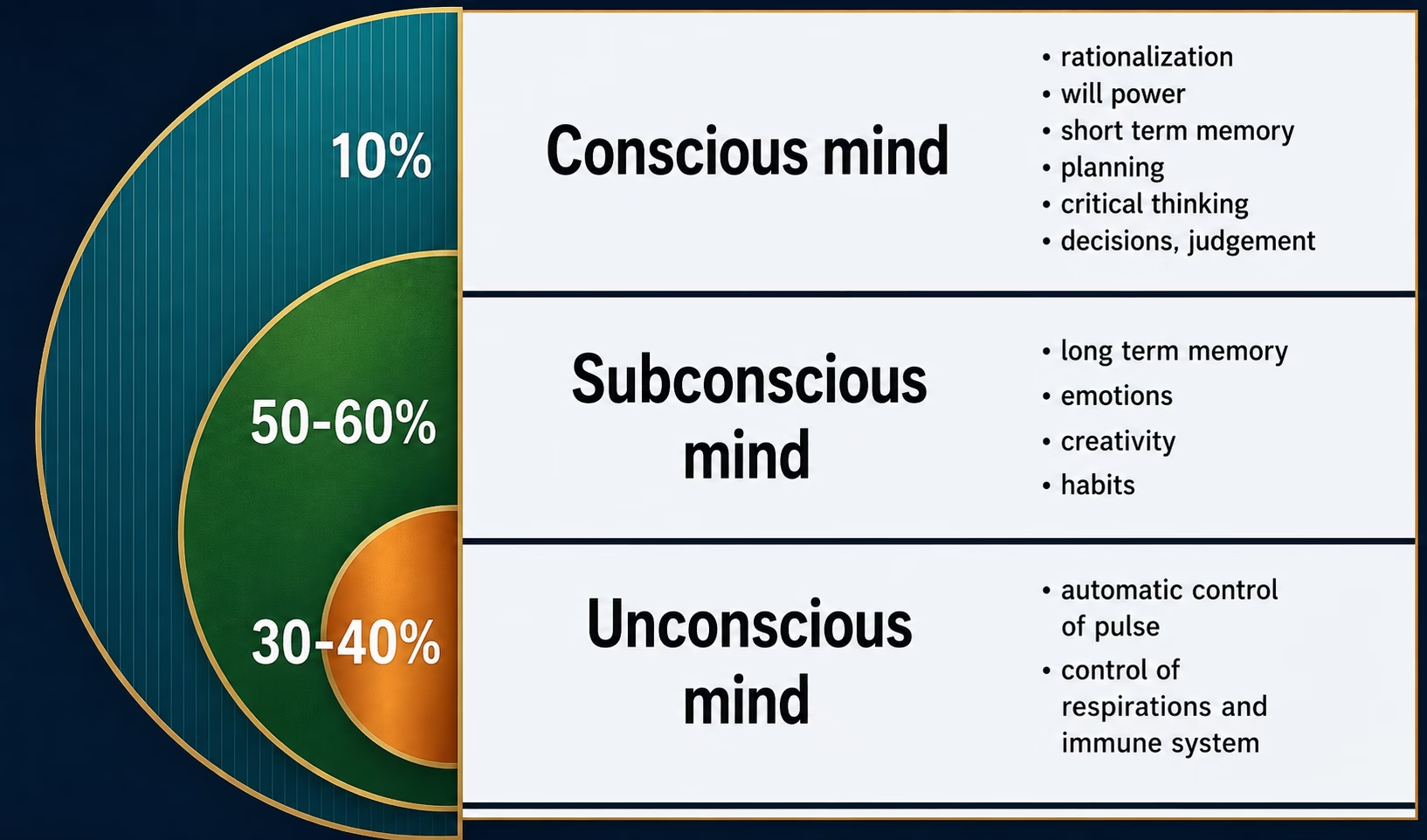
The Conscious Mind represents the part of mental activity through which a person becomes aware of what is happening around them in the present moment. It is responsible for logical thinking, attention, analysis, decision-making, planning, problem-solving, choosing words during conversation, and consciously learning new skills. When you read a book, solve a mathematical problem, compare several options before making a decision, or learn a new language, you are directly using your conscious mind. This level serves as a gateway between the individual and the external world because it receives information from the senses, analyzes it, and determines how to respond to it.
In modern neuroscience, there is no separate part of the brain called the "conscious mind." Rather, consciousness emerges from the continuous cooperation of numerous brain regions, particularly the Prefrontal Cortex, the Parietal Cortex, the Thalamus, and other neural networks that work together to process information, direct attention, and make decisions. Therefore, the conscious mind is a functional concept that describes how a person becomes aware of their thoughts and surroundings, rather than an independent anatomical organ.
The conscious mind begins to operate when the senses receive information from the surrounding environment, such as seeing an image, hearing a sound, touching an object, or smelling a particular scent. This information rapidly reaches the brain, where it is analyzed and compared with previous experiences before an appropriate decision is made. During this process, the brain uses attention, concentration, working memory, and logical thinking to arrive at the best possible response.
Many functions associated with the conscious mind depend on the prefrontal cortex, particularly its anterior regions, which play an important role in the brain's executive functions. It is involved in organizing thought, regulating emotions, evaluating future outcomes, making complex decisions, and monitoring behavior. The more effectively these systems function, the better a person may be able to plan, exercise self-control, and think before acting.
Conscious thinking requires substantial neural resources, so the brain cannot rely on it for every task all the time. For this reason, the brain gradually turns frequently repeated skills into more automatic processes, allowing it to preserve mental resources for new or complex tasks. This is why driving a car or typing on a keyboard becomes much easier after sufficient practice.
Success in education, work, and personal life depends to a significant extent on the effectiveness of conscious mental processes because they are involved in setting goals, organizing time, resisting distractions, analyzing problems, and making sound decisions. They also allow a person to evaluate mistakes and learn from them instead of repeating them, giving them greater control over their behavior rather than responding automatically to different situations.
The conscious mind represents the leader of mental processes that require attention, logical thinking, and decision-making, but it does not operate alone. It relies on information coming from subconscious processes and on the biological processes managed automatically by the brain. As a person develops their thinking, concentration, planning, and continuous learning skills, their conscious mental processes become more effective at directing their life and making wiser and more effective decisions.
Click here to see a list of practical exercises for the conscious mind: Link.
The Subconscious Mind represents a level of mental processing that stores many experiences, memories, habits, skills, beliefs, and repeated responses acquired throughout a person's life. Unlike the conscious mind, which operates during focused attention, subconscious processes operate in the background and influence many decisions and behaviors without the person being aware of it. When you drive a car after years of practice, type quickly on a keyboard, or speak your native language without consciously thinking about every word, these learned automatic processes help manage these activities efficiently.
From a scientific perspective, there is no anatomical structure within the brain called the "subconscious mind." Instead, the term is used in psychology to describe mental processes that occur outside direct conscious awareness, such as habit formation, implicit learning, retrieval of experiences, pattern recognition, and the unconscious influence of beliefs and emotions. Several brain regions participate in these processes, including the Hippocampus, which is involved in memory formation, the Basal Ganglia, which play an important role in habit formation, and the Limbic System, which is involved in processing emotions and motivation.
Subconscious processes receive information that is repeated consistently and gradually transform it into automatic patterns that reduce the effort and energy required from the brain. The more a person repeats a particular behavior or thought pattern, the stronger the neural networks associated with it may become, until the behavior can be performed with little conscious effort.
Every habit begins with a conscious decision, but through repetition it gradually becomes more automatic. When a child learns to write or ride a bicycle, they initially need a great deal of concentration. After months or years of practice, these skills become more automatic because the brain has developed stronger neural networks that allow them to be performed with less mental effort. Therefore, consistent repetition is a key factor in developing both positive and negative habits.
Subconscious processes do not store skills alone; they are also influenced by beliefs acquired from family, school, society, and personal experiences. If positive messages such as "I can learn" or "Mistakes are opportunities for growth" are repeatedly reinforced, they may support self-confidence and motivation. On the other hand, if negative beliefs such as "I am a failure" or "I will never succeed" become deeply established, they may influence decisions and behavior even when the person is not consciously aware of their influence.
Many processes described as subconscious are closely related to Neuroplasticity. As a person repeatedly practices a thought pattern or behavior, the neural networks involved in it can become more efficient, making the behavior easier and faster to perform. This is one reason why many habits and learned responses can be changed through learning, repetition, and continued practice, because the brain retains the ability to reorganize its neural networks throughout life.
The subconscious mind can be understood as a vast repository of experiences, habits, and learned skills acquired throughout life. It helps turn many behaviors into more automatic activities that conserve effort and mental resources. Therefore, the quality of the habits and beliefs a person develops today can influence their future patterns of thinking, decision-making, performance, and overall success.
Click here to see a list of practical exercises for the subconscious mind: Link.
The Unconscious Mind refers to a group of neural and biological processes that operate automatically outside the scope of conscious awareness and aim to maintain human survival and the continuation of life. Although humans are not aware of most of these processes, they operate continuously from birth until the end of life, without requiring conscious thought or decision-making. This includes the regulation of breathing, heart rate, blood pressure, body temperature, digestion, hormone secretion, reflex responses, and many other vital functions that ensure the stability of the body's internal environment.
From a scientific perspective, there is no specific part of the brain called the "unconscious mind." Rather, this term refers to a large group of processes carried out automatically by different regions of the nervous system, such as the Brainstem, the Hypothalamus, and the Autonomic Nervous System, in addition to parts of the limbic system and other neural networks that continuously work to maintain the body's internal balance without conscious intervention.
The unconscious mind continuously monitors the state of the body, receiving thousands of signals from internal organs every second. It then processes these signals and issues immediate commands to maintain the stability of bodily functions. If oxygen levels decrease, breathing becomes faster; if body temperature rises, cooling mechanisms are activated; and if a person is suddenly exposed to danger, the Fight or Flight response begins within fractions of a second, before the conscious mind has time to understand what is happening.
The unconscious mind relies heavily on the Autonomic Nervous System, which is divided into two main branches. The Sympathetic Nervous System prepares the body to face challenges and emergencies by increasing heart rate, raising blood pressure, and releasing adrenaline. The Parasympathetic Nervous System, on the other hand, returns the body to a state of rest, lowers heart rate, and supports digestion, relaxation, and the restoration of energy.
When a person encounters sudden danger, the unconscious mind initiates a series of responses within fractions of a second before the conscious mind begins analyzing the situation. Heart rate increases, the pupils dilate, blood glucose levels rise, and more blood is directed toward the muscles in preparation for escaping or confronting the danger. This response is one of the most important survival mechanisms that evolved over millions of years.
The unconscious mind represents the body's protective and vital management system. It operates continuously to maintain life, regulate the internal environment, and respond rapidly to danger. Although humans are not aware of most of these processes, they are fundamental to the continuation of life and allow the conscious mind to focus on thinking, learning, creativity, and decision-making, while the unconscious mind manages thousands of vital processes in the background with remarkable efficiency and precision.
Click here to see a list of practical exercises for the unconscious mind: Link.
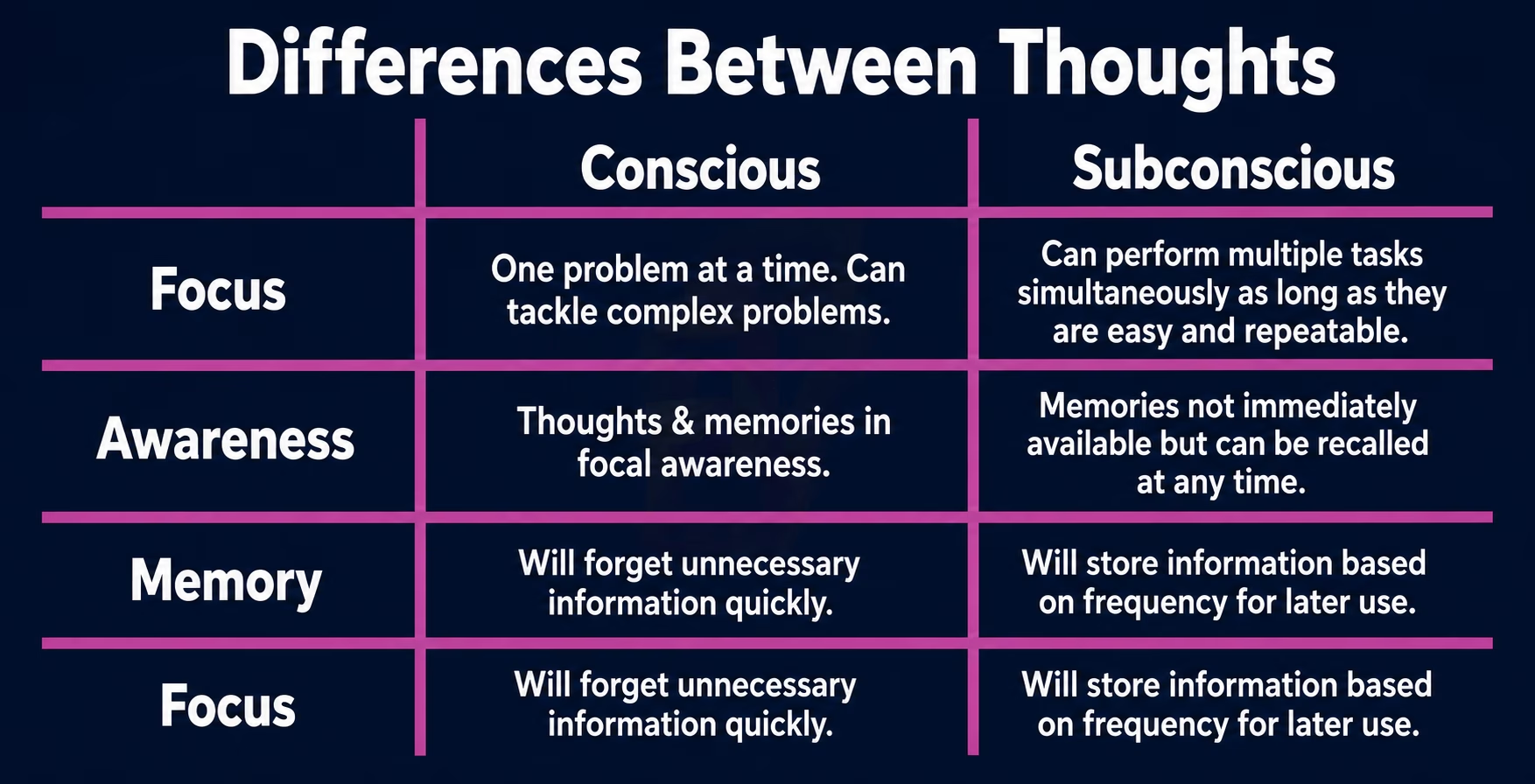
Although the conscious mind, subconscious mind, and unconscious mind are often described as three different levels, they do not operate separately. Instead, they continuously cooperate at every moment of human life. No thought, decision, movement, or response occurs as the result of only one of these levels. Rather, they all emerge from continuous cooperation between conscious processes, automatic processes, and vital functions managed by the brain and nervous system.
When a person encounters a new situation, the unconscious mind first works to maintain the body's stability and monitor the surrounding environment. The subconscious mind then retrieves previous experiences, habits, and information, while the conscious mind analyzes the situation and compares different options before making the appropriate decision. After a behavior is repeated many times, it gradually changes from a task requiring conscious thought into a habit managed automatically by the subconscious mind.
When a person encounters a new situation, information travels rapidly through neural networks within the brain. Within fractions of a second, numerous brain regions work together to analyze the situation and produce the best possible response.
During the first days of learning, the learner relies almost entirely on the conscious mind, thinking about every movement they make, such as starting the car, pressing the pedals, changing gears, and monitoring the road. After weeks or months of practice, these skills gradually move into the subconscious mind, making driving smoother and less demanding on attention. At the same time, the unconscious mind continues to regulate breathing, heart rate, and blood pressure throughout the journey without any conscious intervention.
When learning a new language, a person needs intense concentration to understand words and grammatical rules, making extensive use of the conscious mind. With repeated practice, vocabulary and grammar gradually become more automatic, making speech faster and more natural. Meanwhile, the unconscious mind continues to manage the vital functions that allow the learning process to continue without the person being aware of them.
High-quality mental performance depends on balance between these three levels. If a person relies only on the conscious mind, thinking becomes slow and exhausting. If negative habits stored in the subconscious mind take control, unwanted behaviors may be repeated. If the unconscious mind remains in a constant state of stress, concentration decreases and the ability to learn and make decisions becomes weaker. Therefore, human success depends on continuous cooperation between these levels, rather than on the strength of any one level alone.
The conscious mind, subconscious mind, and unconscious mind do not operate separately. Instead, they form an integrated system that helps humans think, learn, make decisions, acquire habits, and maintain life. The more a person understands how these levels cooperate, the more capable they become of developing themselves, changing their habits, improving their performance, and making use of the immense potential of their brain.
Understanding the three levels of the mind is one of the important steps toward understanding oneself more deeply, because most of our thoughts, emotions, decisions, and daily behaviors are not produced by a single factor. Instead, they result from continuous cooperation between the conscious mind, subconscious mind, and unconscious mind. The conscious mind gives humans the ability to think, analyze, and make decisions, while the subconscious mind stores experiences, habits, and beliefs that shape a significant part of daily behavior, while the unconscious mind manages the vital functions that keep the body alive and balanced without requiring conscious intervention.
Although this division is widely used in psychology and personal development to simplify the understanding of human behavior, modern neuroscience shows that the brain operates as an integrated system in which numerous neural networks cooperate simultaneously, and there are no anatomical boundaries separating these three levels. Nevertheless, this model remains a useful educational tool for understanding how habits are formed, how previous experiences influence behavior, how decisions are made, and the relationship between conscious thinking and automatic processes occurring within the brain.
Humans do not control their lives through willpower alone, habits alone, or vital processes alone. Instead, they do so through continuous integration between these three levels. Every new idea, every skill you learn, every habit you repeat, and every decision you make leaves an impact on your brain and gradually reshapes its neural networks over time. Therefore, true personal development begins with understanding how the mind works and then using this understanding to build better habits, make wiser decisions, improve psychological and physical well-being, and make use of the immense potential of the human brain throughout life.
The division of the mind into conscious, subconscious, and unconscious levels is used as a conceptual model to simplify the understanding of mental processes and human behavior. However, modern neuroscience research indicates that the brain does not operate according to these boundaries literally. Instead, it relies on the cooperation of numerous regions and neural networks that work together at every moment. Therefore, this model should be viewed as an educational tool that helps facilitate understanding, rather than as an anatomically precise description of the structure of the brain.
True development begins when you stop adapting to other people's expectations and start setting your own rules. Through our training packages, we focus on liberating you from limiting patterns, boosting confidence in your decisions, and building a confident personal presence that positively impacts all areas of your life. Invest in your awareness, and turn your potential into tangible results.
Start Your Journey of Change Now© 2022 Copyright All rights reserved. Designed by Tarik Elouahbi.