
The neocortex represents the most highly developed part of the human brain, and it is responsible for most of the higher mental abilities that distinguish humans from other species, such as logical thinking, planning, language, creativity, decision-making, problem-solving, learning, and self-awareness. This cortex is divided into five main lobes, each with specialized functions, but they work together in an integrated manner during almost every activity we perform. When we read a book, talk to someone, make a decision, or learn a new skill, several areas of the brain work together at the same time to process information and transform it into behavior, actions, and outcomes.
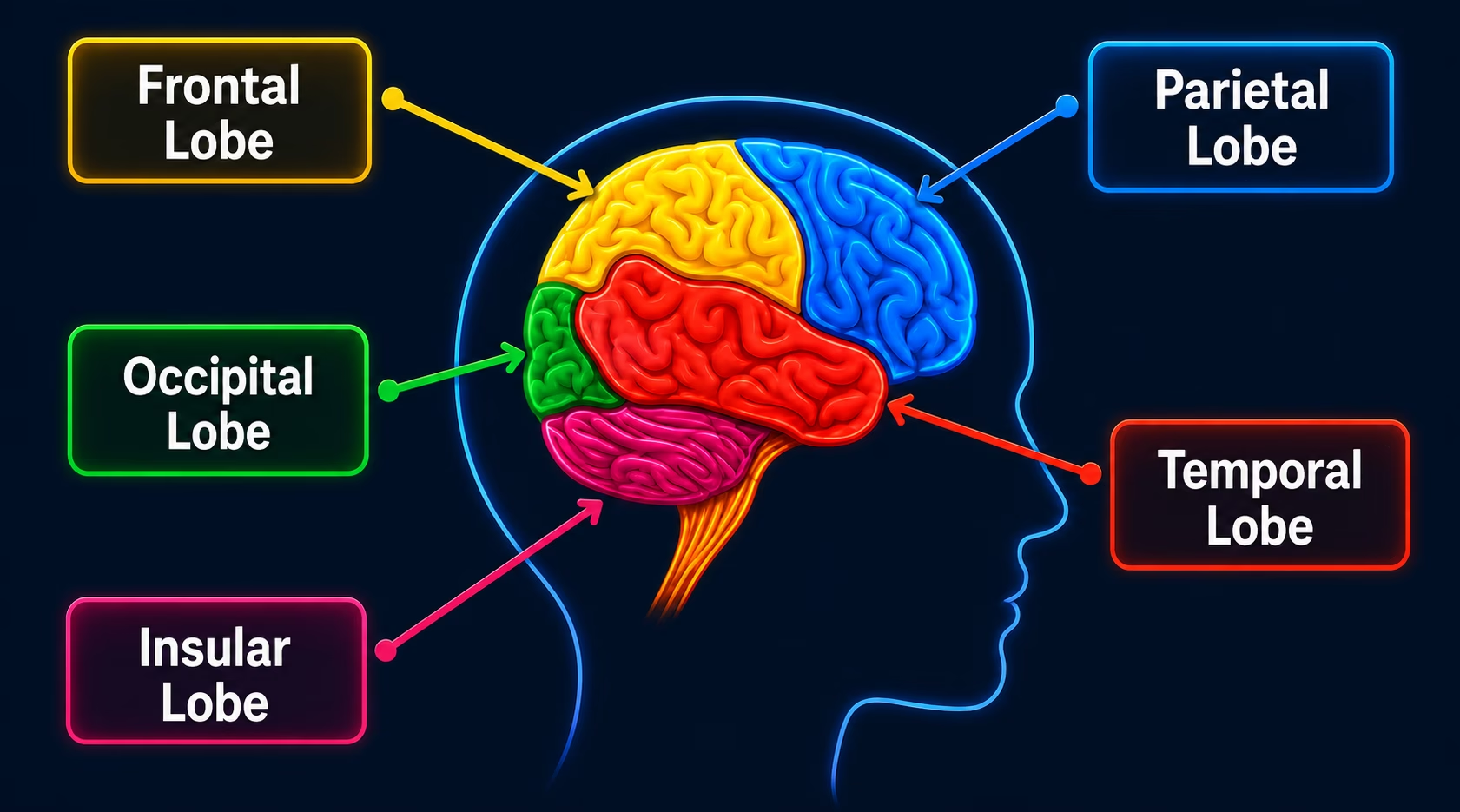
The neocortex is the outer layer of the cerebrum and is considered the most recently evolved part of the brain from an evolutionary perspective. It is responsible for higher cognitive functions such as abstract thinking, planning, attention, language, conscious memory, creativity, and voluntary control of behavior. This region continuously receives information from other parts of the brain, then analyzes it and connects it with previous experiences in order to make the best possible decision.
No lobe of the brain works independently. Instead, all the lobes exchange information within fractions of a second through millions of neural connections. When reading a page of a book, the occipital lobe receives visual information, the parietal lobe helps direct attention, the temporal lobe interprets words and their meanings, while the frontal lobe analyzes the information, connects it to goals, and makes the appropriate decision.
The frontal lobe is the largest lobe of the brain and one of the most highly developed in humans. It is located at the front of the neocortex, directly behind the forehead. It is often referred to by neuroscientists as the "executive of the brain" because it is responsible for managing many of the higher mental functions that enable humans to think, plan, make decisions, regulate emotions, and control behavior. The more active and efficient this region is, the greater a person's ability to think logically, organize their life, achieve their goals, and resist momentary impulses.
Although all parts of the brain work together, the frontal lobe acts as a command center that gathers information coming from the other lobes, analyzes it, compares alternatives, and selects the behavior most appropriate to the situation. For this reason, academic performance, professional success, social intelligence, and leadership ability are strongly influenced by the efficiency of this lobe.
When facing any new situation, the frontal lobe begins by gathering information coming from other parts of the brain. It receives visual information from the occipital lobe, language and memory information from the temporal lobe, and information about the body's position and spatial relationships from the parietal lobe. It then compares this information with current goals and previous experiences before deciding on the appropriate behavior. Therefore, most everyday decisions pass through this region before being carried out.
When a person has several options, the frontal lobe compares the benefits and risks of each option, anticipates future outcomes, and then selects the most appropriate decision. As a person's experience and knowledge increase, this process can become faster and more accurate.
The frontal lobe does not produce emotions, but it helps control how we respond to them. When a person feels anger or fear as a result of activity in the limbic system, the frontal lobe intervenes to analyze and evaluate the situation before the person acts. This is why a person can sometimes control their anger or resist a temporary urge when this region is functioning effectively.
During learning, the frontal lobe uses working memory to temporarily hold information while thinking about it. It then connects this information with previous knowledge and uses it to solve problems. Therefore, poor attention or distraction directly affects the performance of this region.
Injury or reduced activity in this region can lead to difficulties with planning, poor concentration, increased impulsivity, poor decision-making, and difficulty controlling emotions. For this reason, many attention-related disorders and certain brain injuries are associated with impaired frontal lobe functions.
Imagine a student preparing for an important exam who receives an invitation to go out with friends. The student feels a strong desire to go, but the frontal lobe begins analyzing the situation, comparing temporary enjoyment with success in the exam, and then decides to postpone going out until studying is finished. This example illustrates how the frontal lobe helps a person think about the future instead of giving in to immediate desires.
The more active and efficient the frontal lobe is, the greater a person's ability to think clearly, make better decisions, control emotions, and turn goals into reality.
The parietal lobe is located in the upper central part of the brain, directly behind the frontal lobe, and is a major region involved in processing sensory information coming from the body. It is responsible for interpreting sensations such as touch, pressure, heat, cold, pain, and the position of body parts. It also helps with perceiving distances, directions, and spatial relationships between objects. This lobe integrates information coming from different senses to create a more complete representation of the surrounding world, allowing a person to move and interact with the environment effectively.
The role of the parietal lobe is not limited to sensation. It also participates in reading, writing, arithmetic, attention, eye-hand coordination, and understanding spatial relationships. Therefore, it is one of the important brain regions that allows humans to interact accurately with their surrounding environment.
The parietal lobe continuously receives millions of neural signals from the skin, muscles, and joints. It transforms them into meaningful information that helps a person know where their body is, what they are touching, and how they are moving through the environment. It also integrates this information with data coming from the eyes and ears so that the brain can form an accurate representation of the surrounding space.
This lobe allows a person to understand distances, directions, and sizes. It is therefore essential when driving, playing sports, grasping objects, or walking through crowded places. Without its proper functioning, it becomes more difficult to estimate distances or guide movements accurately.
The parietal lobe participates in many learning processes, especially those that depend on visual and spatial perception, such as geometry, drawing, mathematics, and maps. It also helps connect written words with their meanings during reading and participates in understanding logical relationships between shapes and numbers.
Before a person picks up a glass of water, the parietal lobe determines the location of the glass in relation to the body, then sends this information to the frontal lobe and motor areas so that the movement can be performed accurately. This is why most everyday activities depend on continuous cooperation between the parietal lobe and other parts of the brain.
Damage to the parietal lobe can lead to difficulty perceiving the location of objects, reduced sensation in some parts of the body, or difficulties with reading, writing, and arithmetic. A person may also experience problems coordinating movements or recognizing objects through touch alone.
When you pick up your phone from a table without directly looking at your hand, the parietal lobe determines the phone's location relative to your body, calculates the appropriate distance and direction, and then sends this information to motor areas to execute the movement accurately. This process takes place within fractions of a second without your conscious awareness.
The parietal lobe helps humans understand their position in the world and transform sensory information into accurate perception that allows them to move, interact, and learn effectively.
The temporal lobe is located on both sides of the brain below the frontal and parietal lobes, near the ears, and is a major region involved in processing sounds, language, and long-term memory. It also participates in recognizing people and objects, understanding the meanings of words, and regulating certain emotional and behavioral processes. This lobe acts as a link between sensory information and previous experiences, allowing a person to understand what they hear and connect it with what they already know.
The temporal lobe contains highly important neural regions, such as Wernicke's Area, which is involved in language comprehension. It is also closely connected to the Hippocampus, one of the most important regions involved in forming new memories. Therefore, disruption of this lobe can affect the ability to learn, remember, understand speech, and communicate with others.
When a person hears a word or sound, sound waves travel from the ear to the auditory cortex within the temporal lobe, where they are analyzed and identified. If the word is familiar, the brain retrieves its meaning from memory and connects it to the context of the conversation, allowing the person to understand the message and respond appropriately.
The temporal lobe plays an essential role in understanding spoken and written language. It does not simply process words as sounds; it also analyzes their meaning, connects them with concepts stored in memory, and interprets sentences according to context. This is why a person can understand conversations, follow lectures, read books, and communicate with others.
The temporal lobe is one of the important regions involved in forming new memories. It works with the hippocampus to help transform short-term information into long-term memories that can later be retrieved. Therefore, learning depends to a significant degree on the integrity of this region because it contributes to encoding new experiences and connecting them with previous knowledge.
After the occipital lobe processes the image coming from the eyes, the temporal lobe helps identify what we are seeing. It distinguishes between faces, objects, and sounds and compares them with information stored in memory, allowing us to recognize people, tools, or places very quickly.
Damage to the temporal lobe can lead to difficulty understanding language, impaired memory, or difficulty recognizing familiar people or sounds. A person may also have difficulty learning new information or retrieving previous experiences, depending on the specific region of the lobe that is affected.
When someone you have known for years greets you, the temporal lobe first recognizes their voice or face, then retrieves their name and the memories associated with them. It then sends this information to the frontal lobe, which determines how to respond to the greeting. This process takes place within fractions of a second without your conscious awareness.
The temporal lobe is the bridge between what you hear and what you understand, and between what you learn and what you remember. For this reason, it is one of the important brain regions involved in communication, learning, and human experience.
Click here to see a list of practical exercises for the neocortex: Link.
True development begins when you stop adapting to other people's expectations and start setting your own rules. Through our training packages, we focus on liberating you from limiting patterns, boosting confidence in your decisions, and building a confident personal presence that positively impacts all areas of your life. Invest in your awareness, and turn your potential into tangible results.
Start Your Journey of Change Now© 2022 Copyright All rights reserved. Designed by Tarik Elouahbi.