
Behavioral change usually does not happen through a sudden decision, or a single step. Instead, a person goes through a series of psychological and behavioral stages that begin with not recognizing the problem, followed by acknowledging it, preparing for change, taking action, and then maintaining the new behavior. During this journey, a person may experience temporary relapses, but these do not mean failure. Rather, they represent a natural part of the learning and growth process. The Stages of Behavior Change model explains this journey scientifically and helps us understand why some people succeed in making lasting changes, while others struggle to continue despite their sincere desire to change.
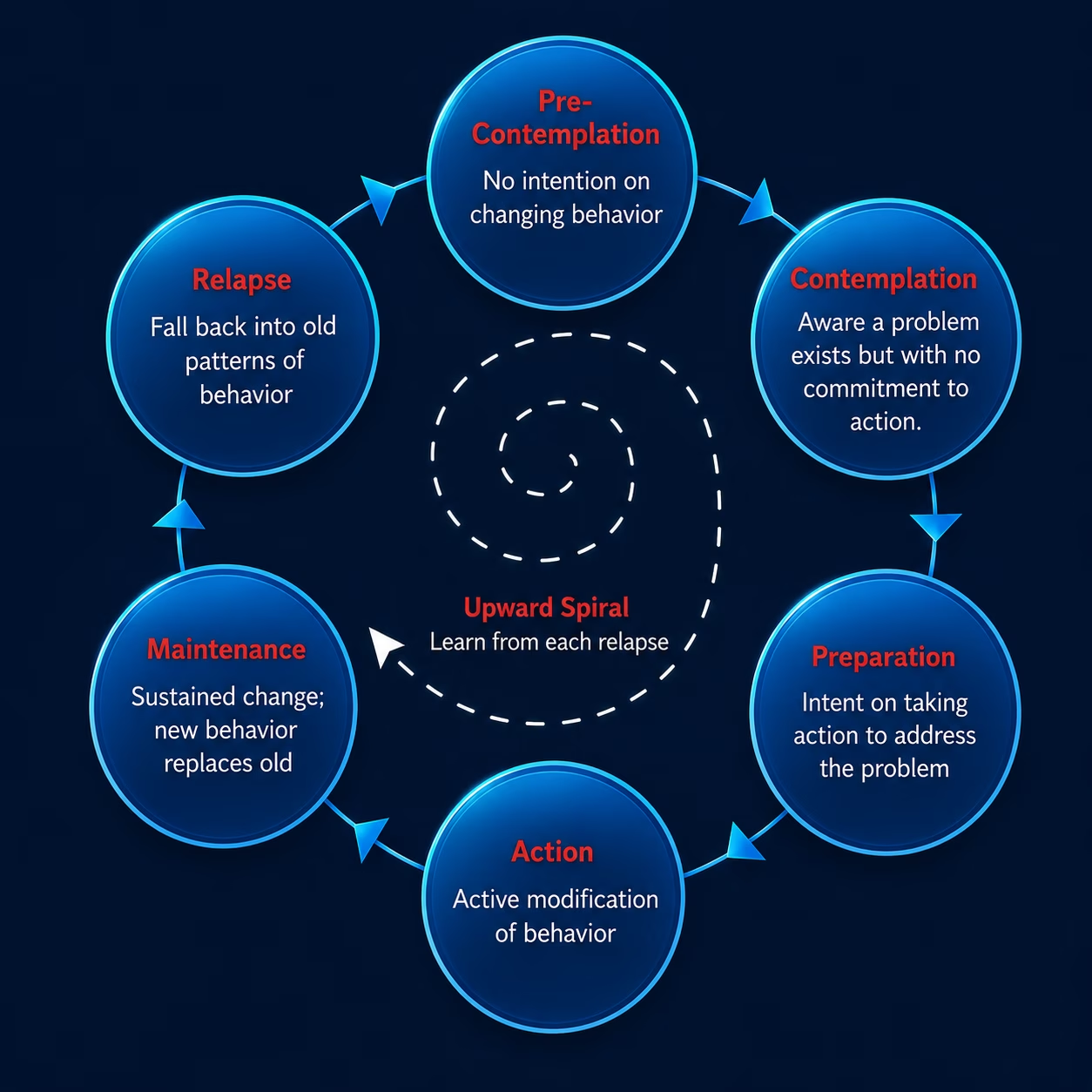
The Stages of Behavior Change model is one of the most well-known models in behavioral psychology, mental health, training, and counseling because it explains how a person moves from resisting change to adopting a new behavior and then maintaining it over time.
This model was developed by researchers James Prochaska and Carlo DiClemente as part of the Transtheoretical Model, after observing that people who successfully change their behavior do not go through the same journey at the same speed. Instead, they move through successive stages that differ from one person to another.
Contrary to the common belief, change does not begin when a person makes a decision. It begins long before that, when the person's perception of the problem, view of themselves, and level of psychological readiness for taking a new step begin to change.
This model views change as a gradual process that passes through several interconnected stages rather than as a sudden event. A person may move forward, return to an earlier stage, or repeat the cycle more than once before the new behavior becomes stable.
| The Traditional View | The Stages of Change Model |
|---|---|
| Change is a single decision. | Change is a journey involving multiple stages. |
| Failure means the end. | Relapse is part of learning. |
| Everyone changes in the same way. | Everyone has a different pace. |
| Willpower is the only factor. | Motivation, environment, habits, and experiences all have an influence. |
When you know which stage you are in, choosing the next step becomes clearer and more realistic.
After understanding the general idea of the model, we will begin by studying its first stage, Precontemplation, where a person does not even see themselves as needing to change.
Precontemplation is the starting point in the journey of behavioral change. It is the stage in which a person does not even see themselves as needing to change. A harmful behavior may have continued for years, but it has become such a normal part of their life that they no longer feel there is a problem worth thinking about or discussing.
At this stage, the person is not ready to take any step toward change because they do not believe there is a reason to do so. For this reason, trying to convince them directly often leads to resistance, defensiveness, or ignoring advice.
A person cannot change something they do not believe is a problem in the first place.
Precontemplation is the stage in which there is no genuine intention to change, whether because of a lack of awareness of the problem, denial, minimizing its impact, or believing that changing it is impossible.
There are many reasons why a person may not see the need for change. One of the most important is that the brain tends to preserve stability, even when the current behavior is unhealthy, because what is familiar feels safer than what is unknown.
| Reason | Explanation |
|---|---|
| Denial. | Refusing to acknowledge the problem. |
| Lack of awareness. | Not knowing the true effects of the behavior. |
| Fear. | Fear of failure or the unknown. |
| Current comfort. | The familiar behavior seems easier. |
| Justification. | Looking for excuses to continue. |
The goal is not to force the person to change, but to increase their awareness of the problem. Therefore, the best strategies at this stage are asking questions, sharing information, and helping the person notice the gap between their current behavior and the goals they want to achieve in the future.
The more a person feels that they are being attacked, the more strongly they may cling to their current behavior, even if they know deep down that it is harmful.
Awareness comes before desire, and desire comes before change.
When a person begins to acknowledge that a problem exists and asks themselves for the first time whether they should change their behavior, they move into the second stage, Contemplation, where an internal conflict begins between staying as they are and starting to change.
Contemplation represents an important turning point in the journey of behavioral change. At this stage, the person begins to acknowledge that a problem exists, but they have not yet made a final decision about changing. They recognize that their current behavior may be causing harm, but at the same time they see change as difficult, costly, or uncertain in its results.
For this reason, this stage is described as a stage of internal conflict, in which the person experiences hesitation between continuing with their current situation and moving toward a different life.
Real change begins when denial turns into the question: "Should I do something?"
Contemplation is the stage in which a person realizes that their current behavior represents a problem and begins thinking about changing it, but has not yet committed to a clear plan or final decision.
Because the brain constantly compares expected gains and losses. It asks itself:
The more the benefits of the current situation seem greater than the benefits of change, the longer the person remains in contemplation without moving into action.
| Benefits of Change | Costs of Change |
|---|---|
| Better health. | Daily effort. |
| Achieving goals. | Leaving the comfort zone. |
| Greater self-confidence. | Fear of failure. |
| Improved quality of life. | Giving up familiar habits. |
The goal is to increase internal motivation so that the benefits of change become clearer than the benefits of remaining in the current situation. Therefore, it is useful to help the person imagine their life after change and connect the new behavior to their personal values and goals.
The clearer the reasons for change become, the easier it becomes to make the decision.
When a person makes a decision and turns their thinking into a genuine intention accompanied by a clear plan, they move into the third stage, Preparation, where they begin preparing themselves practically before implementing the change.
Preparation represents the bridge between thinking and action. At this stage, the person is no longer asking whether they should change. Instead, they have become convinced of the need for change and have begun searching for the best way to achieve it. Change now moves from being merely an idea to becoming a practical project with goals, steps, and a clear plan.
This stage is one of the most important stages of the model because the quality of preparation directly affects the chances of success during the action stage. The more realistic, organized, and compatible the preparation is with the person's circumstances, the greater the likelihood of continuing and the lower the likelihood of an early relapse.
Success in action often begins with the quality of planning, not the strength of willpower.
Preparation is the stage in which a person commits to the decision to change and begins creating a practical plan, gathering resources, preparing the environment, and getting psychologically ready before actually beginning the implementation.
| Behavior | Purpose |
|---|---|
| Gathering information. | Reducing uncertainty. |
| Creating a plan. | Defining clear steps. |
| Preparing the environment. | Making success easier. |
| Setting a start date. | Turning intention into commitment. |
| Seeking support. | Increasing the chances of continuing. |
Many people believe that planning wastes time, but behavioral research suggests that people who decide in advance what they will do, when, where, and how are more likely to succeed than those who rely on improvisation.
One of the most effective tools used at this stage is known as Implementation Intentions, which is based on a simple formula:
If (X) happens, I will do (Y).
For example:
SMART goals help transform general wishes into actionable goals.
| Principle | Meaning |
|---|---|
| Specific | Clearly defined. |
| Measurable | Can be measured. |
| Achievable | Realistically attainable. |
| Relevant | Connected to an important goal. |
| Time-bound | Has a defined time frame. |
It is not enough to plan in your mind. You should also prepare the environment around you to support the new behavior. A supportive environment reduces the need for willpower and makes it much easier to perform the new habit.
Every minute you spend on good planning saves you hours of struggling with chaos during implementation.
Once preparation is complete and the plan is clear, the person begins implementing the new behavior in practice and moves into the fourth stage, Action, where plans become daily actions.
Action is the point at which the decision becomes actual behavior. After recognizing the problem, thinking about changing it, and creating an appropriate plan, the person finally begins implementing the steps they planned. Change now moves from being an idea inside the mind to actions that can be observed in reality.
This stage is the most visible to others because the changes become observable, such as exercising regularly, quitting smoking, organizing time, or improving communication. However, it is also one of the most difficult stages because the person faces resistance from old habits, environmental challenges, fluctuations in motivation, and the pressures of everyday life.
A decision changes the direction, but action changes reality.
The Action stage is the stage in which a person begins implementing the new behavior in practice and makes a conscious effort to maintain it despite difficulties, temptations, and obstacles they may encounter.
Because the brain still has strong neural pathways associated with the old behavior, while the new pathways are still weak. This is why a person initially feels that the new behavior requires focus, effort, and constant reminders, while returning to the old habit seems easier and faster.
| Old Habit | New Behavior |
|---|---|
| Automatic. | Requires focus. |
| Easy to perform. | Requires effort. |
| Associated with strong neural pathways. | Still in the process of being built. |
| Provides immediate comfort. | Requires patience before its results appear. |
During the Action stage, success does not depend on the intensity of effort on a single day, but on repeating the behavior many times. Each time a person repeats the new behavior, the neural connections associated with it become stronger, while those associated with the old habit gradually weaken.
Repetition is the language the brain understands when building new habits.
It is normal for enthusiasm to decrease after the first few days or weeks. Therefore, successful people do not rely on motivation. Instead, they rely on daily systems, consistent schedules, and an environment that makes it easier to continue even when they do not feel like doing so.
This is where the difference between motivation and discipline becomes clear. Motivation fluctuates, while discipline continues even on days when one's mood is low.
Success in the Action stage is not measured by how quickly results appear, but by how many times you continue moving forward despite the difficulty of the journey.
When a person continues practicing the new behavior for a sufficient period and it becomes a natural part of daily life, they move into the fifth stage, Maintenance, where the behavior shifts from conscious effort to a stable way of life.
After successfully performing the new behavior regularly for a period of time, the person reaches the Maintenance stage. At this stage, the goal is no longer to begin the change, but to maintain it. The new behavior has become part of daily life, but it still requires care and monitoring to prevent old habits from returning.
Many people believe that reaching this stage means the challenges are over, but in reality, maintaining the new behavior represents a different kind of challenge. Over time, motivation may decrease, new pressures may appear, or circumstances may change, making a return to the old behavior more tempting if the person is not prepared for it.
True success is not found in starting the change, but in the ability to maintain it when it becomes ordinary.
The Maintenance stage is the stage in which the new behavior becomes relatively stable and the person works to protect it from relapse and fully integrate it into their lifestyle.
As the behavior is repeated over a long period, the brain requires less conscious thought before performing it. The habit begins to operate almost automatically and becomes part of the daily routine, just like brushing your teeth or fastening your seat belt when driving.
However, this does not mean that the habit is guaranteed forever, because stress and major changes in life may weaken commitment if the habit is not maintained.
| Challenge | Impact |
|---|---|
| Boredom. | Decreased motivation. |
| Overconfidence. | Becoming less committed. |
| Stress. | Returning to old habits. |
| Environmental change. | Difficulty maintaining the routine. |
| Unexpected crises. | Increased likelihood of relapse. |
At this stage, the behavior becomes part of the person's identity. They no longer say, "I'm trying to exercise," but instead say, "I am someone who exercises." They no longer say, "I'm trying to read," but see themselves as a reader by nature.
The more a habit becomes connected to identity, the harder it becomes to abandon it, because people naturally seek to behave in ways that are consistent with the image they hold of themselves.
When a habit becomes part of your identity, maintaining it becomes easier than abandoning it.
Despite successfully maintaining the new behavior, a person may sometimes temporarily return to old habits. This is called Relapse, which is the next stage we will explore, and we will see why it does not represent failure, but rather a natural part of the growth journey.
Relapse is one of the most misunderstood stages in the journey of behavior change. Many people view it as the end of the road, a sign of weak character, or complete failure, whereas psychological research indicates that relapse is not an exception, but a natural part of the change process for a significant proportion of people.
After weeks or months of success, a person may temporarily return to some of their old habits because of life stress, exhaustion, changes in circumstances, or lack of follow-up. The problem is not the occurrence of relapse itself, but rather how the person interprets it and how they respond to it.
Relapse does not erase your progress; it reveals what you need to improve.
Relapse is a temporary return to an old behavior after a period of successfully practicing a new behavior. It does not mean losing all previous progress; rather, it represents an opportunity to learn, reassess, and improve the strategy.
Even after a new habit has been established, the neural pathways associated with the old behavior remain in the brain, although they may be weaker than before. When exposed to intense stress or unusual situations, the brain may automatically return to the more familiar behavior because it requires less mental energy.
| Cause | Effect |
|---|---|
| Psychological stress. | Returning to a comforting behavior. |
| Exhaustion. | Reduced ability to exercise self-control. |
| Boredom. | Loss of motivation. |
| Overconfidence. | Neglecting supportive habits. |
| Changes in the environment. | Appearance of old triggers. |
| Relapse | True Failure |
|---|---|
| Temporary setback. | Complete surrender. |
| Can be recovered from. | Not trying again. |
| Provides new experience. | Prevents learning. |
| Part of the change journey. | A decision to end the journey. |
Instead of saying:
They ask themselves:
The fastest way to recover from a relapse is to return to the right habit at the earliest opportunity.
But what if we looked at relapse differently? What if every setback gave us greater experience and made us stronger in the next attempt? This is what the concept of the Growth Spiral explains, which we will explore in the next section.
The concept of the Growth Spiral is one of the most important ideas associated with models of behavior change because it changes the way we view the entire change journey. Instead of seeing change as a straight line that begins at one point and ends with success, this concept presents a more realistic perspective, in which a person progresses, falls back, and then progresses again, but each time they return, they are more experienced, more aware, and better prepared than before.
Therefore, relapse does not return a person to square one. Instead, it brings them back to a point above where they were before because they now possess new knowledge about themselves, the obstacles they faced, and the strategies that worked or failed for them.
You do not return to the beginning after every relapse; you return with experience you did not have before.
It is called a spiral because the movement is not circular, returning a person to the exact same point. Instead, it is spiral-like; each new cycle takes place at a higher level than the previous one. A person may return to reflection or preparation after a relapse, but this time they return with a deeper understanding, better skills, and a more realistic plan.
| Linear Growth | Growth Spiral |
|---|---|
| Any relapse means failure. | Relapse is part of learning. |
| Returning to square one. | Returning with greater experience. |
| Progress should be continuous. | Progress includes ups and downs. |
| A mistake means weak character. | A mistake is a source of information. |
When a person views relapse as a learning experience, they begin to ask different questions:
These questions transform a mistake from a source of frustration into a source of information, making each new attempt smarter than the previous one.
People do not grow despite their mistakes; they grow when they learn from them.
The Growth Spiral is highly consistent with the concept of the Growth Mindset, which holds that abilities can be developed through practice, learning, and perseverance. Therefore, people with a growth mindset do not consider relapse a judgment of their abilities, but rather a natural step toward mastery.
What matters is not how many times you stumble, but how many times you rise with greater experience than before.
After understanding that the change journey moves in the form of a Growth Spiral, we will move on to explore the psychological processes that help a person move between the different stages and make change more stable and sustainable.
Behavior change does not occur simply by moving from one stage to another. It depends on a set of psychological processes that work together to drive a person toward progress. Each stage of change requires different internal skills, beginning with awareness, then motivation, decision-making, habit formation, and persistence despite obstacles.
The stronger these psychological processes are, the more stable the change journey becomes, and the lower the likelihood of returning to the old behavior. This is why psychologists do not focus only on behavior itself, but also on the mental and emotional processes that drive it.
Behavior is the visible result, while psychological processes are the real engine behind it.
Awareness is the beginning of any meaningful change because it allows a person to notice their behaviors, thoughts, habits, and their impact on their life. Without awareness, a person continues repeating old behavioral patterns automatically.
Awareness increases when a person begins to notice the relationship between their daily actions and the results they obtain, rather than placing all the blame on external circumstances.
After awareness comes the need for motivation, which is the force that drives a person to take action. Motivation may be internal, such as the desire for growth, or external, such as receiving a reward or avoiding a punishment.
Research indicates that intrinsic motivation is more stable than extrinsic motivation because it is connected to a person's values, identity, and personal goals rather than temporary rewards alone.
Self-efficacy refers to a person's belief in their ability to successfully perform the new behavior. The greater their confidence in their ability to face difficulties, the more likely they are to continue when obstacles arise.
Psychologist Albert Bandura explained that self-efficacy influences the amount of effort a person invests, their persistence, and the speed of their recovery after setbacks.
It is not enough for a person to want change; they must make a clear decision to commit to it. A decision becomes stronger when it comes from internal conviction rather than pressure from others.
Clear goals help transform a general desire into practical, actionable steps. The more specific, measurable, and realistic the goals are, the greater the chances of success.
Commitment means continuing to perform the behavior even when motivation decreases. It relies on values, personal responsibility, and discipline more than temporary feelings.
With regular repetition of a behavior, the brain begins to build new neural pathways that make performing the behavior easier over time, until it becomes a natural part of the daily routine.
Emotions directly influence behavior. Therefore, a person needs to learn how to manage stress, anger, frustration, and anxiety in healthy ways so that they do not return to old habits whenever they experience psychological pressure.
Self-monitoring means continuously tracking behavior, such as recording how often a person exercises, how many hours they study, or how much water they drink each day. Monitoring makes progress visible and increases commitment.
People who achieve long-term success do not try to avoid mistakes completely; instead, they use them to improve their plans. Every mistake represents new information that helps them make better decisions in the future.
Resilience is the ability to recover after stress and setbacks and continue pursuing a goal. The greater this resilience, the less affected a person becomes by temporary obstacles.
Persistence means continuing to work despite slow results or a difficult path. It is one of the most important factors distinguishing people who achieve lasting change from those who stop at the first obstacle.
| Process | Function |
|---|---|
| Awareness. | Recognizing the problem. |
| Motivation. | Driving behavior. |
| Self-efficacy. | Increasing confidence in success. |
| Decision-making. | Committing to change. |
| Goal setting. | Directing effort. |
| Commitment. | Maintaining consistency. |
| Habit formation. | Turning behavior into an automatic response. |
| Emotional regulation. | Managing emotions. |
| Self-monitoring. | Tracking progress. |
| Learning from mistakes. | Improving performance. |
| Resilience. | Recovering after relapse. |
| Persistence. | Continuing until success. |
Success in behavior change does not depend on willpower alone, but on the cooperation of a group of psychological processes that support a person at every stage of the journey.
Despite the presence of these supportive psychological processes, a person may face many obstacles that hinder their progress. Therefore, in the next section we will explore the most common obstacles to behavior change and how to deal with them in a scientific way.
Although a person may have a genuine desire to change, create a good plan, and actually begin implementing it, the path of change is not free of obstacles. The human brain naturally tends to preserve familiar patterns because familiar behaviors require less energy than learning new ones. This is why a number of psychological, behavioral, and environmental obstacles may slow the change journey or lead to relapse if they are not addressed consciously.
Obstacles are not evidence that the path is wrong; they are evidence that you are moving outside your comfort zone.
Fear of failure is one of the most common reasons people avoid starting or continuing change. Some people prefer to remain in an uncomfortable situation rather than face the possibility of failure because they associate failure with their personal worth instead of viewing it as a learning experience.
When a person does not believe in their ability to succeed, they expect failure before they begin, which reduces their effort and causes them to stop quickly when they encounter the first obstacle. This is why self-efficacy is considered one of the most important factors influencing successful change.
Motivation naturally fluctuates. It may be high at the beginning and then decrease after days or weeks. Therefore, relying on enthusiasm alone makes consistency difficult, while daily systems and stable habits help overcome periods of low motivation.
Stress depletes mental resources, making a person more likely to return to old behaviors that provide temporary relief, even if they are harmful in the long term.
Emotions such as anxiety, sadness, anger, and frustration may push a person to seek immediate relief, such as overeating, procrastinating, spending hours on their phone, or engaging in other habitual behaviors.
The surrounding environment may be the greatest obstacle to change. It is difficult to maintain a healthy diet when unhealthy foods are constantly available, or to quit smoking when all of your friends smoke.
Habits that have been repeated for many years are associated with strong neural pathways. Therefore, they do not disappear simply because a person decides to change. They require time, repetition, and patience to gradually weaken.
A person may be influenced by cognitive biases such as Confirmation Bias, causing them to seek only information that supports maintaining their current behavior while ignoring evidence that encourages change.
Some people begin changing without clear goals, a practical plan, or preparation for obstacles, which causes them to stop quickly when they encounter their first problem.
When a person expects major results within a short period, they become frustrated when those results do not appear quickly. They may interpret slow progress as failure, even though it represents a natural part of the learning process.
| Obstacle | Effect |
|---|---|
| Fear of failure. | Prevents starting. |
| Low self-confidence. | Early surrender. |
| Decreased motivation. | Failure to continue. |
| Psychological stress. | Returning to old habits. |
| Negative emotions. | Impulsive behavior. |
| Unsupportive environment. | Increased temptations. |
| Old habits. | Automatic resistance. |
| Cognitive biases. | Distorted thinking. |
| Poor planning. | Quickly stopping. |
| Unrealistic expectations. | Frustration. |
Every obstacle can be overcome when it is identified, understood, and addressed appropriately.
After identifying the main obstacles that affect the change journey, we will move on to a set of practical tools that have proven effective in increasing the chances of success and maintaining the new behavior over the long term.
After understanding the stages of behavior change, the psychological processes that support them, and the obstacles that may interfere with them, the most important question remains: How do we turn knowledge into practical results? This is where the importance of behavioral tools becomes clear. These tools have demonstrated effectiveness in psychology, behavioral science, training, and cognitive behavioral therapy. They do not rely on willpower alone, but help people design environments and systems that make the new behavior easier and more sustainable.
Success in behavior change does not depend on making a greater effort, but on using better systems.
SMART goals are among the most widely used tools because they transform general wishes into clear goals that can be implemented, measured, and evaluated.
| Principle | Meaning |
|---|---|
| Specific | The goal should be specific. |
| Measurable | The goal should be measurable. |
| Achievable | The goal should be realistic. |
| Relevant | The goal should serve an important purpose. |
| Time-bound | The goal should have a deadline. |
This tool is based on linking a specific situation to a specific behavior so that the decision is prepared in advance and the person does not need to think about it every time.
If (X) happens, I will do (Y).
For example: If I finish work, I will walk for thirty minutes.
This strategy involves linking a new habit to an existing habit, making it easier to remember.
The environment influences behavior more than most people realize. Therefore, modifying the environment is often easier than constantly trying to resist temptations.
When a person consistently measures their progress, they become more aware of their behavior and better able to correct mistakes before they accumulate.
A notebook, electronic application, or simple table can be used to record daily progress.
The likelihood of success increases when another person knows about your plan or follows your progress because this increases the sense of commitment and responsibility.
This person may be a coach, friend, family member, or even a support group.
Rewards help reinforce the new behavior, especially during the early stages before the habit becomes automatic.
Ideally, rewards should be related to the goal and should not undermine the new behavior. For example, buying a book after maintaining a reading habit for a full month is preferable to overeating as a reward for following a diet.
Having people who encourage you and understand your goals is one of the strongest factors supporting consistency, especially during periods when motivation decreases.
Journaling helps people review their experiences, notice recurring patterns, and learn from successes and relapses instead of going through them without benefiting from them.
One of the most effective strategies is to anticipate obstacles before they occur and create a plan for dealing with them.
Instead of asking, "What will I do if I relapse?" ask from the beginning: "What situations are most likely to cause me to relapse, and how will I deal with them?"
| Tool | Main Benefit |
|---|---|
| SMART. | Goal clarity. |
| Implementation intentions. | Reducing hesitation. |
| Habit stacking. | Ease of remembering. |
| Environmental design. | Reducing temptations. |
| Self-monitoring. | Measuring progress. |
| Accountability. | Increasing commitment. |
| Rewards. | Reinforcing behavior. |
| Social support. | Increasing motivation. |
| Journaling. | Increasing awareness. |
| Relapse prevention plan. | Maintaining consistency. |
Each of these tools reduces reliance on willpower and increases reliance on a system that continuously supports your success.
After exploring the practical tools, we still need to see how this model relates to some of the most well-known psychological and behavioral models used in psychology, training, and behavioral therapy in order to understand the complete picture of behavior change.
The Stages of Behavior Change model does not operate independently from other psychological theories. Rather, it is part of a broader system that explains how people think, why they behave in certain ways, and how they can modify their behaviors sustainably. For this reason, psychologists, coaches, and psychiatrists use this model alongside other models, with each one complementing a different aspect of the change process.
Some models explain motivation, others explain how habits are formed, while others clarify environmental factors. Some also help us understand the thinking patterns that drive behavior. When we understand the relationship between them, the change process becomes clearer and more comprehensive.
No single model fully explains human behavior, but combining several models gives us a more complete picture.
The Habit Loop model explains how habits are formed through four stages:
While the Stages of Behavior Change model explains when a person begins to change, the Habit Loop model explains how a behavior is repeated until it becomes an established habit.
This theory explains the source of motivation and emphasizes that people achieve the best results when motivation comes from within rather than being driven only by external pressure.
It is based on three basic psychological needs:
The COM-B model proposes that any behavior depends on the combination of three elements:
| Element | Meaning |
|---|---|
| Capability | Ability. |
| Opportunity | Opportunity. |
| Motivation | Motivation. |
If any of these elements is missing, changing behavior becomes more difficult, even when the desire to change is present.
This model is widely used in organizational change management, but it can also be useful at the personal level.
A strong similarity can be observed between this model and the Stages of Behavior Change, as both begin with awareness, followed by motivation, implementation, and maintenance of the change.
The Japanese philosophy of Kaizen is based on the idea that small daily improvements lead to significant results over time. It aligns closely with the action and maintenance stages because it encourages continuous improvement without requiring major changes all at once.
The Growth Mindset emphasizes that abilities can be developed through practice, learning, and perseverance. Therefore, people with a growth mindset view relapses as opportunities to learn rather than evidence of failure.
This is why the concept is directly connected to the idea of the Growth Spiral found in this model.
Cognitive Behavioral Therapy focuses on the relationship between thoughts, emotions, and behavior. When thinking patterns change, changing behavior becomes easier and more sustainable.
For this reason, many therapists use this model alongside the Stages of Behavior Change, particularly when addressing addiction, anxiety, procrastination, and negative habits.
| Model | What Does It Explain? |
|---|---|
| Habit Loop. | How habits are formed. |
| Self-Determination Theory. | Sources of motivation. |
| COM-B. | Factors influencing behavior. |
| ADKAR. | Change management. |
| Kaizen. | Continuous improvement. |
| Growth Mindset. | Learning from mistakes. |
| CBT. | The relationship between thinking and behavior. |
Each model answers a different question, and when these answers come together, our understanding of change becomes deeper and more effective.
After exploring the stages of change, the psychological processes, the obstacles, the tools, and the related models, what remains is to summarize the key practical ideas that can help you apply this model in your daily life and transform it from theoretical knowledge into a way of life.
The Stages of Behavior Change model shows that real change is not a momentary decision and does not depend on willpower alone. Rather, it is a gradual psychological and behavioral process that moves through several interconnected stages. A person often begins by not recognizing the problem, then moves toward thinking about it, followed by planning for change, taking action, maintaining the new behavior, and potentially experiencing relapse before returning again with greater experience and awareness through the Growth Spiral.
This model emphasizes that change is not a straight line, but a journey filled with experiences, successes, mistakes, and lessons. Each stage has its own purpose, challenges, and skills, and no stage can be passed through without leaving an impact on the next one.
We also learned that successful change depends on a combination of factors, such as awareness, motivation, self-efficacy, planning, habit formation, emotional regulation, and psychological resilience, in addition to using practical tools such as SMART goals, implementation intentions, environmental design, self-monitoring, and social support.
One of the most important messages of this model is that relapse is not failure, but a natural part of the learning journey. A person does not start from zero after every setback. Instead, they return with a deeper understanding of themselves, greater experience, and more effective strategies that can help them succeed in the next attempt.
Success is not about never stumbling; it is about becoming stronger, wiser, and closer to the person you want to be every time you rise.
Ultimately, behavior change is not simply about eliminating a bad habit or acquiring a good one. It is about reshaping the way you think, make decisions, and relate to yourself and to life. When continuous learning and gradual development become part of your identity, the change journey will no longer be merely a temporary phase. It will become a way of life that leads you toward continuous growth, more stable success, a more balanced life, and greater awareness.
True development begins when you stop adapting to other people's expectations and start setting your own rules. Through our training packages, we focus on liberating you from limiting patterns, boosting confidence in your decisions, and building a confident personal presence that positively impacts all areas of your life. Invest in your awareness, and turn your potential into tangible results.
Start Your Journey of Change Now© 2022 Copyright All rights reserved. Designed by Tarik Elouahbi.