
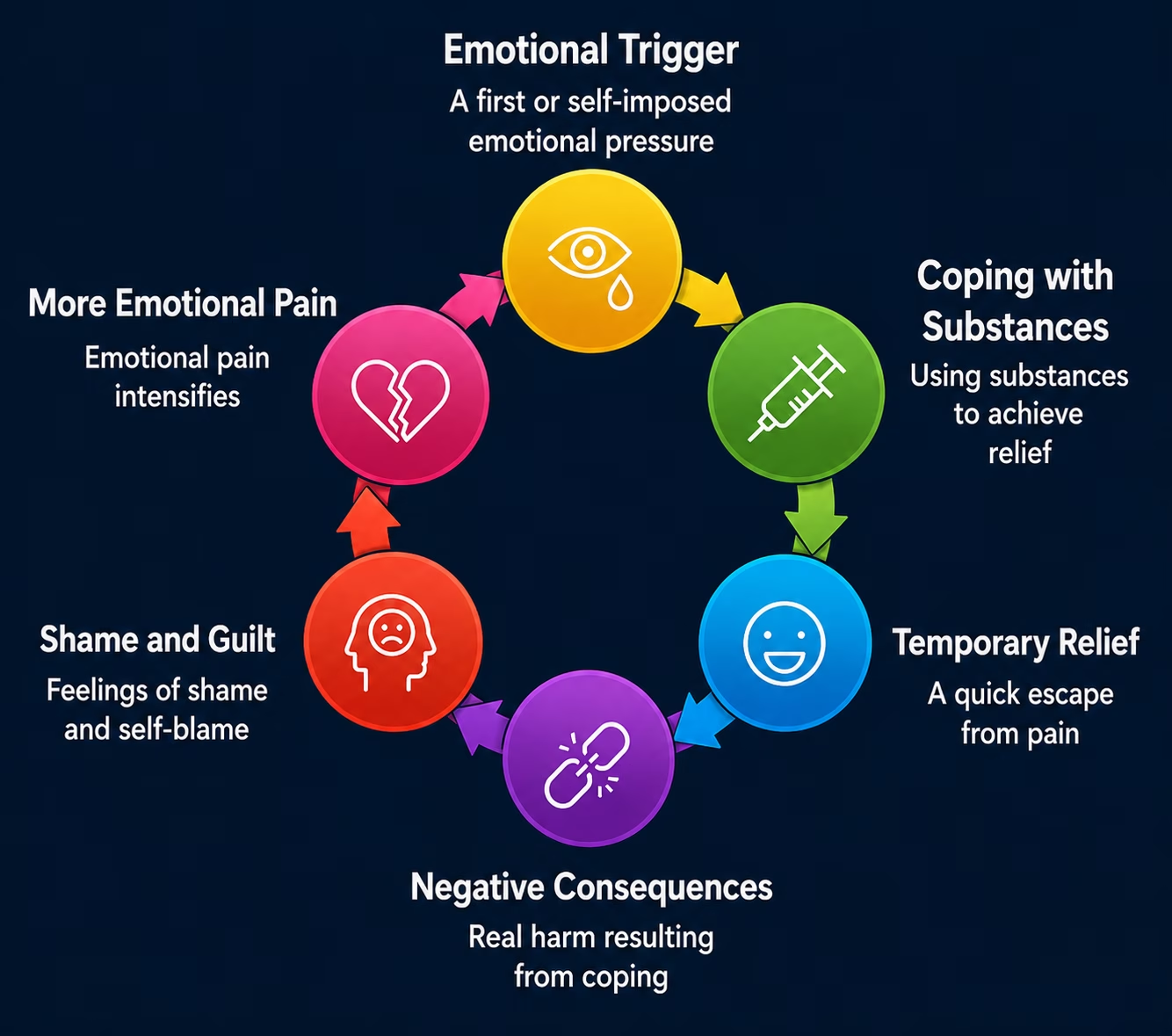
Addiction does not usually begin with a desire to destroy one's life. Rather, it often begins as an attempt to get rid of painful feelings such as sadness, anxiety, loneliness, or psychological stress. At first, substance use or a particular behavior may seem to provide quick relief, but this relief is temporary. The problems then return, often with greater intensity, which drives the person to repeat the same behavior. Over time, the addiction cycle develops, becoming a repeating sequence of events that can be difficult to escape without awareness or support.
Understanding this cycle helps us recognize that addiction is not simply a matter of weak willpower. Rather, it is a psychological and behavioral pattern fueled by temporary relief from pain and strengthened each time the cycle is repeated. The earlier a person intervenes in the cycle, the greater the opportunity to break it.
Before studying the addiction cycle, it is first important to understand what addiction actually means. Many people associate it only with drugs or alcohol, while others use the word to describe any repeated habit, such as drinking coffee or watching television. However, the scientific use of the term is more precise than that.
Addiction is a condition in which a person loses some of their ability to control their use of a particular substance or engagement in a particular behavior, despite being aware of the resulting harm. The problem, therefore, is not simply the existence of the behavior itself, but the person's continued engagement in it and inability to stop, even when its negative consequences have become clear.
The difference between a habit and an addiction is that a habit can be relatively easy to stop, whereas addiction continues despite the person's awareness that it is harming them.
Psychology views addiction as a repeated attempt to regulate emotions or escape stress in an unhealthy way. When a person experiences psychological pain, stress, or emptiness, they may discover that a particular substance or activity makes them feel better quickly. With repetition, the brain begins to associate the pain with this means of relief, until the response becomes automatic.
This is why many people do not become addicted because they love the substance itself, but because they love the temporary feeling it gives them, or because they dislike the feelings they experience without it.
One of the most common misconceptions is the belief that an addicted person is simply weak-willed. However, modern research indicates that addiction affects brain circuits involved in reward, decision-making, and impulse control, making it more difficult to resist urges over time.
This does not mean that a person is not responsible for their actions. Rather, it means that treatment should not depend on blaming or shaming the person, but on helping them understand the underlying causes, develop new skills, and build an environment that supports recovery.
Addiction can generally be divided into two main types.
| Substance Addiction | Behavioral Addiction |
|---|---|
| Alcohol. | Gambling. |
| Nicotine. | Video games. |
| Drugs. | Social media. |
| Sedatives. | Pornography. |
| Certain medications. | Compulsive shopping and emotional eating. |
Although these types differ, they share a broadly similar psychological mechanism: an attempt to escape painful feelings or obtain a quick reward, followed gradually by becoming trapped in a cycle that can be difficult to escape.
Not every use of a substance or engagement in a particular behavior means that addiction is present. It begins to become an addiction when several signs appear, such as loss of control, increasing amounts of time spent on the behavior, continuing despite harm, and experiencing a strong urge when attempting to stop.
Now that we understand the true meaning of addiction and how it differs from ordinary habits, we can begin studying the first step in the addiction cycle: the Emotional Trigger, which represents the spark that starts the entire cycle.
Most cases of addiction do not begin with a desire to use a substance or engage in a particular behavior. Instead, they begin moments, hours, or even days earlier, when a person encounters a situation, feeling, or thought that creates a state of discomfort. In psychology, this is referred to as an Emotional Trigger, because it represents the spark that ignites the desire to escape from pain.
It is important to understand that a trigger does not force a person into addiction. Rather, it creates a psychological state that causes the brain to quickly search for a familiar way to reduce the discomfort. If the person has previously learned to use a substance or behavior to escape these feelings, the brain will automatically suggest this solution.
A trigger does not create addiction; it activates a pathway the brain has previously learned to use to escape pain.
An emotional trigger is any event, situation, thought, or feeling that creates a state of stress, discomfort, or psychological pain, causing a person to search for a quick way to regain a sense of relief. The trigger may be obvious, such as a problem at work, or hidden, such as a feeling of emptiness whose source the person does not understand.
Therefore, two people may experience the same situation, yet one may feel an urge to use a substance while the other does not, because the determining factor is not the event itself, but the meaning the person gives to that event and the way they have learned to deal with it.
Triggers vary from one person to another, but they can be classified into several main groups.
| Type of Trigger | Examples |
|---|---|
| Negative emotions | Anxiety, sadness, anger, and fear. |
| Life stress | Work, studies, and responsibilities. |
| Relationships | Conflicts, rejection, and loneliness. |
| Environment | Places or people associated with addiction. |
| Physical states | Fatigue, hunger, and lack of sleep. |
Clinical experience suggests that certain emotions frequently occur before addictive behavior.
These feelings may seem ordinary because they are a natural part of life. The problem arises when addiction becomes the primary way of dealing with them.
By nature, the brain seeks to reduce pain and increase comfort. When it discovers that a particular substance or behavior achieves this goal quickly, it begins to store this information as an effective solution. With each repetition, the connection between pain and substance use becomes stronger until it develops into an almost automatic response.
Psychological pain
↓
Desire to get rid of it
↓
Remembering the addictive behavior
↓
Increased craving
Not all triggers come from within the person. They can be divided into internal and external triggers.
Internal triggers include emotions, thoughts, memories, and physical sensations, such as feeling lonely or thinking about a previous failure.
External triggers, on the other hand, include people, places, smells, sounds, and situations that were previously associated with addictive behavior, such as passing by a place where the person used to use drugs or seeing friends associated with their addiction.
This is due to differences in previous experiences, personality, ways of thinking, and each person's psychological history. An exam may be a major source of stress for one student while representing no significant problem for another. Likewise, loneliness may be a powerful trigger for someone who has experienced repeated rejection, while it may have little effect on someone with stable social relationships.
It is not the event itself that determines the amount of pain, but the person's interpretation of the event and their previous experiences with it.
After the emotional trigger appears, the addiction itself has not yet occurred. The next stage begins: turning to the substance or addictive behavior as the quick solution the brain has learned will relieve the pain and provide temporary relief. This is the stage we will discuss in the next section.
After the emotional trigger appears and the person experiences anxiety, sadness, anger, or emptiness, the brain begins searching for the fastest way to get rid of this discomfort. If the person has previously used a particular substance or behavior to obtain relief, the brain automatically recalls this experience and presents it as the fastest solution.
This is where the next stage of the addiction cycle occurs: substance use or addictive behavior. At this moment, the person often does not focus on long-term consequences. Instead, they focus on getting rid of their current pain, even if this comes at the expense of their future, health, or relationships.
In a moment of addiction, a person is not necessarily looking for happiness; they are looking for an end to the pain.
When a person feels distressed, the brain attempts to restore balance as quickly as possible. If it has previously learned that a particular substance or behavior can achieve this goal within minutes, it begins sending strong signals that encourage the person to repeat the behavior.
This is why many people with addiction do not say, "I want to hurt myself." Instead, they say, "I just want to stop feeling this pain."
Most addictive behaviors involve activation of the Reward System in the brain. During substance use or addictive behavior, the release of Dopamine increases. Dopamine is a neurotransmitter associated with reward, anticipation, and motivation.
The problem is not dopamine itself, because it is essential for learning, achievement, and motivation. Rather, addiction can produce unusually strong reward signals, teaching the brain that this method is one of the fastest ways to obtain relief or a rewarding experience.
Emotional trigger
↓
Substance use or addictive behavior
↓
Increased dopamine activity
↓
Temporary feeling of relief
The type of addiction may differ, but the psychological mechanism is often similar.
| Substance Addiction | Behavioral Addiction |
|---|---|
| Alcohol. | Gambling. |
| Nicotine. | Video games. |
| Drugs. | Social media. |
| Sedatives. | Pornography. |
| Certain medications. | Compulsive shopping and emotional eating. |
Although these substances and behaviors differ, they can send the brain a similar message: "I have found a quick way to escape the pain."
At first, substance use may simply be an experiment or a temporary way of dealing with stress. However, with repetition, the brain strengthens the neural connections associated with the behavior. The more the cycle is repeated, the faster the craving appears and the stronger its effect becomes.
Over time, a person may need to increase the amount or duration of the behavior to achieve the same feeling, because the brain begins adapting to the increased level of stimulation. This phenomenon is known as Tolerance.
Because the brain focuses more on immediate reward than on distant consequences. Temporary relief occurs within minutes, while health, social, or financial consequences may take weeks, months, or years to become clearly visible.
This is why the decision may seem logical to the person in that moment, even though they may regret it later.
Addiction can convince a person that immediate relief is more important than future pain.
In the early stages, the goal may be pleasure, but as addiction continues, the motivation gradually changes. Instead of seeking euphoria, the primary goal may become getting rid of distress, avoiding withdrawal symptoms, or stopping painful emotions.
In other words, the person moves from "I want to feel better" to "I just want to stop feeling bad."
After substance use or addictive behavior, the person usually experiences rapid improvement and a reduction in tension and pain. However, this improvement does not last long. In the next section, we will explore the stage of Temporary Relief and why it is such an important part of the addiction cycle, because it teaches the brain to repeat the behavior again and again.
After substance use or addictive behavior, the person reaches the stage that keeps the entire addiction cycle going: Temporary Relief. At this moment, the person experiences a reduction in anxiety, stress, sadness, or emptiness, as if the problem has disappeared. This is why many people believe that addiction is the solution, when in reality it only postpones the problem rather than treating it.
This stage is one of the most powerful forces maintaining the cycle because it acts as a strong reward for the brain. The brain does not focus as much on the harm that may occur hours or days later; it focuses on the immediate outcome. When it discovers that the addictive behavior made the person feel better, it records the behavior as an effective method worth repeating.
The greatest deception of addiction is that it provides real relief, but the relief is very short-lived and comes at a very high cost.
The nature of the feeling varies depending on the type of addiction and the individual, but many people describe this stage as a moment of calm, relief, euphoria, or temporary freedom from psychological pressure.
This is why the person often does not feel that they have made a mistake at that moment. Instead, they may feel that they have found the solution they were looking for.
The brain operates according to a relatively simple principle: if a behavior reduces pain or increases a rewarding feeling, the likelihood of repeating that behavior in the future increases. In psychology, this process is known as Positive Reinforcement when the behavior produces a pleasurable feeling, or Negative Reinforcement when the behavior removes an unpleasant feeling, such as anxiety or stress.
Psychological pain
↓
Substance use or addictive behavior
↓
Temporary disappearance of the pain
↓
The brain learns to repeat the behavior
Because addictive behavior does not address the real cause of the problem. If a person feels lonely, using drugs, playing games, or using social media may make them forget the feeling for a while, but it does not build new relationships. If a person feels anxious because of pressure at work, substance use may reduce the stress for a few hours, but it does not solve the problem at work.
Therefore, when the effect of the substance or behavior ends, the pain returns, and sometimes it becomes stronger than before because negative consequences have begun to accumulate.
| Temporary Relief | Genuine Treatment |
|---|---|
| Relieves pain quickly. | Addresses the underlying cause. |
| Short-term effect. | Long-term results. |
| Increases dependence over time. | Increases independence. |
| Postpones the problem. | Helps address the problem. |
As addiction continues, the brain adapts to the increased level of stimulation, so the feeling of relief is no longer as strong as it was initially. As a result, the person may need to increase the dose or engage in the behavior for longer periods to achieve the same feeling, while the harm continues to increase.
This phenomenon causes the person to enter an endless race in which they try to regain the initial feeling, but rarely succeed in doing so.
What begins as a search for pleasure can end as a desperate attempt to recover a feeling that is no longer there.
When the effect of temporary relief ends, the next stage of the addiction cycle begins: Negative Consequences. At this stage, health, psychological, social, and financial problems begin to appear, creating a new source of pain that can restart the cycle from the beginning.
In the previous stage, the person experienced temporary relief and felt that the pressure had disappeared for a while, but this effect does not last long. As the effects of the substance or addictive behavior wear off, negative consequences gradually begin to appear. These consequences may be minor at first, but they accumulate as the addiction cycle is repeated, eventually affecting every aspect of a person's life.
This is where the fundamental paradox of addiction appears; the very means a person used to escape pain becomes a source of new pain, often more severe and more complicated than the original problem.
Addiction promises to remove pain, but it often adds even more pain.
Because addictive behavior consumes time, energy, health, money, and relationships without addressing the underlying problem. The more it is repeated, the more it begins to affect a person's performance, decision-making ability, and control over their life, making their life more complicated than it was before the addiction began.
At first, the person may not notice these harms because they develop gradually, but over time they become increasingly clear and difficult to ignore.
The effects of addiction on the body vary depending on the type of substance or behavior, but most forms of addiction can lead to a decline in overall health over time.
Although the person may have used addiction to escape anxiety or sadness, these emotions often return more strongly over time because the original problem remains untreated while new problems have emerged because of the addiction itself.
Addiction does not affect only the individual; its effects extend to family members, friends, and coworkers, because addictive behavior often leads to isolation, neglect of responsibilities, or frequent conflicts, weakening relationships over time.
| Area | Examples of consequences |
|---|---|
| Family | Frequent conflicts and loss of trust. |
| Friends | Isolation and loss of relationships. |
| Work | Decreased productivity and frequent absences. |
| Education | Poor concentration and declining academic performance. |
Many forms of addiction gradually consume significant amounts of money, whether through purchasing substances, spending money on addictive behaviors, losing employment, or experiencing reduced productivity.
Because the negative consequences themselves can become new triggers for addiction. When a person feels shame, failure, loss, or anxiety because of these consequences, they once again look for a way to escape, returning to the same addictive behavior, believing that it will relieve their pain, and the cycle begins again.
Addiction
↓
Negative consequences
↓
Psychological pain
↓
Desire to escape
↓
New addictive behavior
The most dangerous thing about addiction is that it can make the problem itself a reason to continue the addiction.
After these consequences accumulate, a new stage begins within the addiction cycle: shame, guilt, and self-blame. These emotions are not merely consequences of addiction; they can become psychological fuel that restarts the cycle, which we will explore in the next section.
After the negative consequences appear, the addiction cycle does not end. Instead, it enters one of its most dangerous stages: shame, guilt, and self-blame. At this stage, the person begins to recognize the extent of the losses caused by the addiction, whether to their health, work, education, relationships, or financial situation, leading to a range of painful emotions that increase their psychological suffering.
The problem is that these emotions do not always lead to change. Instead, they can themselves become a reason to return to addiction. Rather than facing the pain, the person tries to escape it through the same method they have become accustomed to, allowing the cycle to continue.
Many people do not return to addiction because of pleasure, but because of the pain caused by the addiction itself.
Although people often use the two words interchangeably, psychology distinguishes between them.
| Guilt | Shame |
|---|---|
| I feel that I did something wrong. | I feel that I am a bad person. |
| Focuses on the behavior. | Focuses on the person's worth. |
| May motivate a person to make amends. | May lead to withdrawal and giving up. |
Guilt can be a healthy emotion when it motivates a person to apologize or correct a mistake. Shame, however, becomes more harmful when it makes a person believe that they do not deserve change, success, or help.
At this stage, negative internal dialogue begins to dominate thinking, and statements such as these may repeatedly appear:
The more these thoughts are repeated, the stronger the negative emotions become, making it increasingly difficult to see any possibility of change.
When a person feels guilt, shame, or frustration, their psychological pain increases, and they try to escape from it. Because the brain has previously learned that addiction temporarily reduces this pain, it suggests returning to it once again.
Negative consequences
↓
Guilt and shame
↓
Increased psychological pain
↓
Desire to escape
↓
Return to addiction
In this way, addiction becomes a solution to a problem created by addiction itself.
Because every time the cycle is repeated, new losses accumulate, self-confidence weakens further, and social, health, and financial problems increase, making the current pain greater than the pain that originally started the cycle.
This is why many people who have struggled with addiction for years feel that they can no longer remember the original problem, because the addiction itself has become the bigger problem.
Over time, a person is no longer escaping their original problem; they are escaping the consequences of years of trying to escape.
Self-blame is one of the factors that can prolong the addiction cycle the most. When a person constantly attacks themselves, feelings of helplessness and hopelessness increase, while confidence in their ability to change decreases, making recovery more difficult.
Genuine recovery begins when a person learns to take responsibility for their actions without turning their mistakes into a final judgment of their worth as a human being.
Now that we understand how feelings of guilt and shame can fuel the continuation of the addiction cycle, we can move to the most important part of the article: How can you break the addiction cycle? We will explore practical interventions that can help stop the cycle, gradually regain control over life, and build lasting change.
After understanding how the addiction cycle begins and continues, the most important question becomes: How can it be stopped? The important answer is that breaking addiction does not depend on willpower alone, as many people believe. Instead, it depends on understanding the cycle and intervening at more than one stage. The earlier a person intervenes, the easier it becomes to break the cycle; the longer they wait until the stage of substance use or addictive behavior, the more difficult the task becomes.
True recovery therefore does not simply mean abstaining from the substance or behavior. It means developing a new way of dealing with stress, emotions, and life in general, so that addiction is no longer the only solution the brain knows.
Do not only try to resist addiction; learn how to live without needing it.
You cannot control something you do not recognize. Therefore, the first step in recovery is identifying the situations, people, emotions, and thoughts that come before the urge to use a substance or engage in an addictive behavior.
When the urge appears, it can be helpful to ask yourself:
Simply naming the emotion can help reduce its impact because the person moves from an automatic reaction toward awareness of what is happening.
Many people believe that an urge to use a substance or engage in an addictive behavior will continue until they act on it, but urges often rise gradually and then begin to decrease if they are not reinforced. Therefore, delaying the response for a few minutes may be enough to reduce its intensity.
Urge appears
↑
Reaches its peak
↓
Begins to decrease
If it is not reinforced
This approach is sometimes called Urge Surfing, because the person learns to observe the urge until it passes instead of surrendering to it.
It is not enough simply to stop the addictive behavior. The brain also needs a healthy alternative that helps it deal with stress in a different way.
| Instead of... | Try... |
|---|---|
| Smoking when stressed. | Deep breathing or walking. |
| Emotional eating. | Drinking water, walking, or writing. |
| Playing games for hours. | Exercising or learning a new skill. |
| Endless scrolling. | Reading a book or calling a friend. |
The goal is not to replace one addiction with another, but to teach the brain healthier ways to obtain relief and regulate emotions.
If the underlying cause remains untreated, the risk of returning to addiction remains high. Therefore, it is important to explore the original problem the person was trying to escape.
When you address the underlying cause, the need to escape from it decreases.
The environment influences behavior more than most people realize. If a person remains surrounded by the same places, people, and habits, the risk of relapse remains high.
Therefore, it can be helpful to:
Many people try to recover on their own and view asking for help as a sign of weakness. In reality, support from family, friends, support groups, mental health professionals, or qualified medical professionals can significantly improve the chances of successful recovery.
Recovery is not a test of courage. It is a learning process that requires tools, guidance, and an appropriate environment.
After exploring practical ways to break the addiction cycle, we will move to the final section and the most important lessons learned: how to build a life that does not depend on escaping pain, but instead develops the skills needed to face it, transforming the cycle of addiction into a cycle of recovery, growth, and balance.
Addiction is not simply a lack of willpower or merely a bad habit. It is a repeated psychological, neurological, and behavioral cycle that often begins with an emotional trigger, then drives a person to seek a quick way to escape pain. This produces temporary relief, followed by negative consequences, guilt, shame, and increased suffering, which restart the cycle once again.
One of the most dangerous aspects of this cycle is that it can make a person believe that the problem is a lack of willpower, while the deeper problem often lies in the way they deal with emotions, stress, and psychological pain. Therefore, focusing only on stopping the behavior may work for a short period, but it may not be enough if the underlying causes remain unaddressed.
True recovery does not begin simply when a person stops the addiction; it begins when they learn to face life without needing it.
Just as the brain learns addiction through repetition, it can also learn recovery through repetition. Every time a person chooses to face their emotions in a healthy way instead of escaping from them, they build new neural pathways, strengthen their confidence in themselves, and move one step closer to freedom.
Emotional trigger
↓
Awareness of emotions
↓
Choosing a healthy response
↓
Genuine relief
↓
Greater self-confidence
↓
Continued growth and recovery
Over time, these small choices become new habits and eventually develop into a healthier, more stable, and more balanced way of life. Just as the addiction cycle is fueled by repetition, the recovery cycle also grows through repetition, practice, and patience.
Every time you resist the urge to escape and choose to face what you are experiencing, you are not simply breaking a habit; you are rebuilding your life, your brain, and your future.
True development begins when you stop adapting to other people's expectations and start setting your own rules. Through our training packages, we focus on liberating you from limiting patterns, boosting confidence in your decisions, and building a confident personal presence that positively impacts all areas of your life. Invest in your awareness, and turn your potential into tangible results.
Start Your Journey of Change Now© 2022 Copyright All rights reserved. Designed by Tarik Elouahbi.