
Success is usually not achieved through temporary effort or a moment of enthusiasm, but through a continuous cycle of positive behaviors that are repeated over time. The Growth Cycle model explains that success begins with discipline, then develops into consistency, leading to results and achievements, which in turn strengthen a person's self-confidence and increase their level of discipline, allowing the cycle to begin again at a stronger level.
The Growth Cycle consists of three interconnected stages: Discipline, Consistency, and Success. Each stage directly influences the next, making personal development an ongoing process that depends more on daily commitment than on talent or circumstances alone.
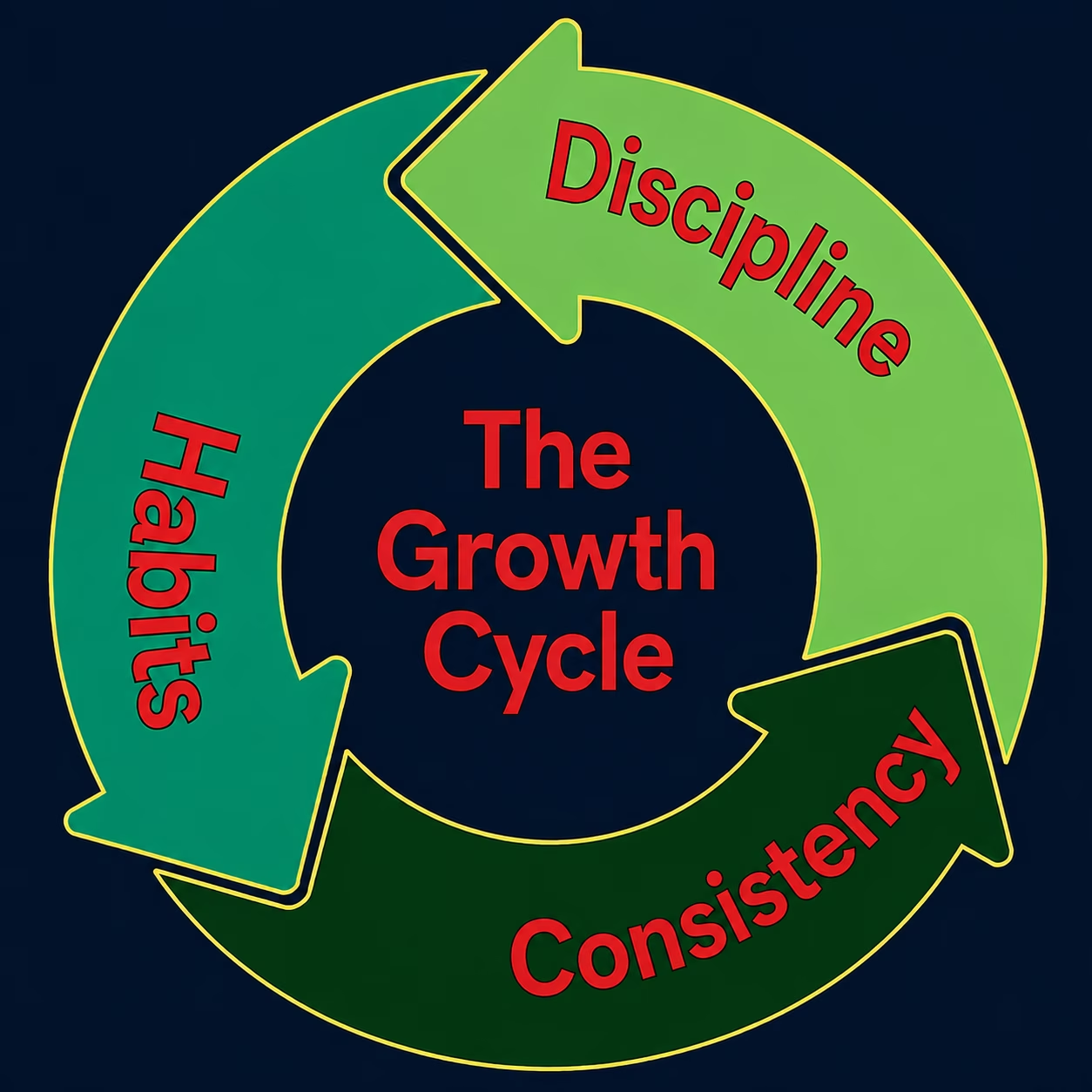
The Growth Cycle begins with one of the qualities that has the greatest impact on a person's life: Discipline. Many people associate success with enthusiasm, motivation, or favorable circumstances, while research in behavioral psychology suggests that highly successful people rely less on temporary feelings and more on their ability to commit to what needs to be done, even when they do not feel like doing it. Therefore, discipline represents the foundation upon which all subsequent stages of growth are built.
Discipline does not mean deprivation or being harsh with yourself, as some people believe. Rather, it means the ability to direct your behavior in a way that serves your long-term goals, even when those goals conflict with your immediate desires. It is a skill that enables a person to make the right decisions repeatedly, instead of being driven by mood, laziness, procrastination, or changing circumstances.
Discipline is the ability to choose what you need, rather than being carried away by what you want in the present moment.
Discipline is the ability to organize behavior, exercise self-control, and commit to a specific plan, even in the absence of motivation or when facing difficulties or temptations. It represents the difference between knowing what should be done and actually doing it.
Clear Goal
+
Discipline
=
Consistent Behavior
Motivation is naturally a changing feeling; it rises on some days and falls on others. Discipline, on the other hand, is a conscious decision that does not depend on one's mood. Therefore, people who rely only on enthusiasm often start strongly and then stop quickly, while disciplined people continue working even when they do not feel like it, allowing them to make steady progress over time.
| Motivation | Discipline |
|---|---|
| Temporary feeling. | Consistent behavior. |
| Changes quickly. | Built through practice. |
| Depends on mood. | Depends on commitment. |
| May disappear suddenly. | Remains even when enthusiasm is absent. |
Every time a person follows through with what they planned, even when they do not feel like doing it, they strengthen their self-confidence and prove to their mind that they are capable of controlling their behavior. Over time, a new self-image develops, and the person begins to see themselves as disciplined, responsible, and capable of commitment, making it easier to maintain this behavior.
Discipline does not only build achievements; it builds the person capable of achieving them.
Many factors can reduce a person's ability to stay committed, such as unclear goals, procrastination, excessive distractions, poor time management, constant exhaustion, and complete reliance on motivation. Trying to change everything at once can also make it more difficult to maintain discipline.
This is why behavioral scientists recommend starting with small habits that can be maintained consistently, because succeeding in maintaining them strengthens the sense of competence and encourages the gradual addition of new habits.
Discipline is not achieved once and then maintained forever; rather, it is a series of small daily decisions. Every day, a person chooses between what they want now and what they want in the long term, and this choice determines the direction of their life over time.
Small Decisions
↓
Daily Discipline
↓
Big Results
But discipline alone is not enough to achieve growth. This commitment must become a behavior that is repeated regularly until it becomes an established habit. Therefore, the Growth Cycle moves to the second stage, Consistency, where discipline develops into long-term persistence.
If discipline is the initial spark that pushes a person to begin, then Consistency is the fuel that keeps this progress going over time. Many people can stay committed for a few days or weeks, but only a few succeed in turning this commitment into a lasting way of life. Therefore, consistency represents the link between temporary effort and continuous growth, giving a person the ability to achieve cumulative results that far exceed what they could achieve through short bursts of effort.
Many people mistakenly believe that great achievements require extraordinary actions, while research in behavioral psychology shows that most great achievements result from simple actions repeated consistently over long periods. A book is not written in one day, physical fitness is not built in one week, and mastery of skills is not achieved after a single training session. All of these develop through regular daily practice.
Success is not created by what you do once, but by what you do consistently.
Consistency is the ability to continue performing the same behavior regularly, even when results are slow or not visible at first. It does not mean working without stopping; rather, it means maintaining a steady pace that can be sustained over the long term.
Discipline
↓
Regular Repetition
↓
Established Habit
Many people believe that success requires giving maximum effort every time, but the problem is that this approach often leads to exhaustion and then quitting. Consistency, on the other hand, relies on a different principle: moderate effort that can be maintained for a long period produces better results than intense effort that cannot be sustained.
| Intermittent Effort | Consistency |
|---|---|
| Strong at the beginning. | Steady over time. |
| Followed by interruption. | Few interruptions. |
| Increases exhaustion. | Makes persistence easier. |
| Produces unstable results. | Produces cumulative results. |
One of the most important characteristics of consistency is that its results usually do not appear immediately. Instead, they accumulate gradually until a point is reached where the improvement becomes very noticeable. This is why some people feel frustrated at first because they cannot see the impact of their daily efforts, while the real change has already begun to develop within them.
What you do today may not show its effect tomorrow, but it may change your life months or years from now.
With regular repetition of a behavior, the brain gradually begins to turn it into a habit, reducing the need for significant mental effort to perform it. This is why studying, exercising, reading, or working becomes easier the longer a person continues practicing it.
This explains why disciplined people may appear to be putting in less effort while accomplishing more: many of their behaviors have become automatic as a result of long-term consistency.
What most threatens consistency is expecting quick results, trying to achieve perfection, or becoming discouraged after a single mistake. Missing one day does not destroy a habit, but believing that this interruption means complete failure is what often leads to giving up entirely.
Do not seek perfection...
Seek consistency instead.
But consistency is not the ultimate goal; it is simply the means that allows a person to improve continuously. Through repeated practice, correcting mistakes, and gaining experience, a person gradually reaches the third stage of the Growth Cycle, Mastery, where the skill develops into a high level of competence, quality, and professionalism.
The Mastery stage represents the natural result of discipline and consistency. It is not a point that a person suddenly reaches, nor is it a level that someone is born with, but rather the result of thousands of attempts, mistakes, corrections, and experiences accumulated over time. The more a person continues to practice a particular skill consciously, the more their level of performance gradually improves, until the skill becomes easier, more precise, faster, and more efficient.
Some people believe that mastery means reaching a stage where a person never makes mistakes, but this is an unrealistic view. Mastery does not mean the absence of mistakes; rather, it means that a person has become capable of identifying mistakes quickly, correcting them efficiently, and continuously learning from them. Therefore, mastery is not the end of learning, but the beginning of a deeper stage of it.
Mastery is not about becoming perfect, but about continuously becoming better than your previous self.
Mastery is reaching a high level of competence, quality, and accuracy in performing a particular skill as a result of conscious, continuous practice and learning from previous experiences. It represents the stage at which a person begins to use their skills with confidence, flexibility, and a greater ability to deal with different situations.
Practice
+
Continuous Correction
=
Mastery
A person may repeat the same behavior thousands of times without improving if they continue repeating the same mistakes. This is why learning scientists distinguish between ordinary repetition and Deliberate Practice. Deliberate practice relies on observation, feedback, error correction, and gradually increasing the level of challenge, and it is what leads to genuine mastery.
| Ordinary Repetition | Deliberate Practice |
|---|---|
| Repeating the same behavior. | Improving the behavior each time. |
| May repeat the same mistakes. | Continuously corrects mistakes. |
| Limited development. | Continuous development. |
| Relies on habit. | Relies on conscious learning. |
As a person approaches mastery, their confidence naturally begins to increase, not because they have convinced themselves that they are exceptional, but because they have real evidence of their progress. They also become more capable of making decisions, solving problems, and dealing with new situations because their previous experiences provide them with a strong foundation to rely on.
True confidence does not come from positive thinking alone, but from mastery built through practice.
One of the most remarkable characteristics of the Growth Cycle is that mastery does not represent its end; instead, it brings the person back to the stage of discipline, but at a higher level. When a person notices their progress, their confidence in their ability to stay committed increases, and they become more willing to build new skills or develop their existing ones. This begins a new Growth Cycle that is stronger than the previous one.
Greater Mastery
↓
Greater Confidence
↓
Stronger Discipline
↓
New Growth Cycle
Because they stop halfway, expect improvement to happen quickly, repeat the same behavior without reviewing it, or fear making mistakes. People who reach high levels of mastery understand that mastery is not an event, but a long journey of continuous learning.
Some people also stop once they reach a good level, while high achievers continue developing themselves even after achieving success because they view mastery as an ongoing process.
In this way, the Growth Cycle is completed; discipline leads to consistency, consistency leads to mastery, while mastery strengthens a person's confidence and makes them more capable of staying committed, beginning a new cycle of continuous growth. In the final section, we will bring these stages together into one model and explore how to apply them practically in different areas of life.
After understanding the elements of the Growth Cycle, the model may seem simple in theory, but its real value appears when it becomes a way of life. Discipline, consistency, and mastery are not separate concepts; they are an integrated process that can be applied to almost any area, whether learning, work, sports, relationships, financial management, or personal development. The more consciously you apply this cycle, the more stable and sustainable the growth process becomes.
A person does not need to change their entire life to begin. It is enough to choose one area they want to develop and start building a small Growth Cycle within it. Over time, this way of thinking spreads to other areas of life, until development becomes a daily habit rather than a temporary project.
Do not try to change everything at once. Build one Growth Cycle, then let it expand gradually.
Discipline
↓
Consistency
↓
Continuous Improvement
↓
Mastery
↓
Higher Discipline
Many people do not fail because of a lack of ability, but because of repeated mistakes in the way they approach the development process. Some of the most common mistakes include waiting for motivation before starting, setting unrealistic goals, comparing personal progress with the progress of others, stopping after the first setback, or believing that success should happen quickly.
The pursuit of perfection is also one of the most common reasons people stop, because it makes them believe that any mistake means failure. The Growth Cycle, however, shows that mistakes are not obstacles, but a natural part of the learning process.
| Mistake | Correct Alternative |
|---|---|
| Waiting for motivation. | Start with discipline. |
| Striving for perfection. | Focus on progress. |
| Stopping after a mistake. | Learn, then continue. |
| Comparing yourself with others. | Compare yourself with yourself. |
| Expecting quick results. | Think long term. |
The Growth Cycle shows that real development does not depend on talent alone or temporary motivation. Instead, it is built on three interconnected stages that begin with discipline, which drives a person to commit to what needs to be done, then develop into consistency, where this commitment becomes a stable habit. Through continued deliberate practice, the person reaches mastery, which increases their competence and confidence and brings them back into a new cycle of discipline, learning, and continuous improvement.
This model also shows that success is not created by a single event, but by thousands of small decisions repeated day after day. Every positive habit, every small step, and every new attempt adds another building block to the development of character, skills, and experience. Therefore, people who achieve great accomplishments are not always the most talented, but are often the ones most capable of committing, persevering, and learning from their mistakes until the Growth Journey becomes a natural part of their lives.
Start with discipline, maintain consistency, and allow mastery to come with time, because real growth is not a single leap, but a journey repeated every day, making each version of you better than the one before.
True development begins when you stop adapting to other people's expectations and start setting your own rules. Through our training packages, we focus on liberating you from limiting patterns, boosting confidence in your decisions, and building a confident personal presence that positively impacts all areas of your life. Invest in your awareness, and turn your potential into tangible results.
Start Your Journey of Change Now© 2022 Copyright All rights reserved. Designed by Tarik Elouahbi.